€18,452 in direct payments per farm in 2019
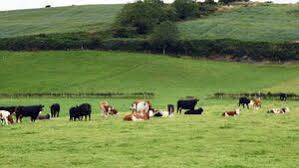
The average farm size included in the Teagasc National Farm Survey in 2019 was 43ha with average income per hectare coming in at €554.
Direct payments averaged €18,452 per farm in 2019, accounting for 77% of family farm income (FFI), according to the preliminary results for the 2019 National Farm Survey - carried out by Teagasc - which were issued in June and referred to in the Annual Review and Outlook for Agriculture, Food and the Marine.
The survey pointed to “noticeable differences” between farm types; estimates for dairy farms show that the direct payments account for only 31% of income, while cattle and sheep farms are very reliant on direct payments and would be operating at an economic loss without them.
Family farm income is significantly higher on dairy farms than on any other farm type, even when farm size is taken into account.
Similarly, when distinguishing between full-time and part-time farms in terms of labour input, dairy farms produce higher family farm income per hectare.
“The average farm size included in the Teagasc National Farm Survey in 2019 was 43ha with average income per hectare coming in at €554 - up slightly on €541 in 2018,” the review and outlook stated.
“In 2019, the average dairy farm was 59ha in size and had an average FFI of €1,132 per hectare - this represents an 8% increase or €85/ha on 2018 figure.
“Tillage had the second highest economic return per hectare at €568 - a decrease of €107 on 2018 figures.
“In 2019, the average income per hectare was lowest on cattle rearing farms, at €288 - however this represents a 7% increase on 2018 figure or an additional €18/ha.” Meanwhile, average FFI per hectare on cattle (Other) farms was €384 - a 2% decrease on 2018 figures or €391.
The equivalent figure on sheep farms was €311, up from €276 in 2018.
With regard to off-farm income, in 2019 over 52% of farm households had a source of off-farm employment income in 2019.
According to the Teagasc survey this represents a 1% increase on the 2018 figures.
The proportion of farm households where the spouse was employed off-farm rose slightly to 34% in 2019 while the proportion of farmers employed off-farm was slightly less, at 33%. “However, the levels of off-farm employment differs by system,” said the review.
“Dairy farm households are more likely to have a source of off-farm income within the household when compared to the other farm systems.
“The spouses of dairy farmers in particular are employed off-farm at a higher rate than for other systems.
“This reflects the younger demography of these dairy households; the higher age profile of non-dairy farm households is reflected in the fact that they were, on average, more than twice as likely to be in receipt of pension income.
“Cattle farmers are more likely to work off-farm than in the case of other systems while 40% of cattle (Other) farmers had an off-farm job in 2019.
“Off-farm employment in cattle rearing farms decreased by 3% compared to 2018 figures, totally 40%, in 2019.
“A lower proportion of sheep and tillage farmers worked off-farm in 2019, at 36% and 37% respectively - a slight increase in both cases relative to 2018 data.
“11% of dairy farmers were engaged in off-farm employment in 2019.”