IFA: With Brexit looming, our sector needs a budget boost
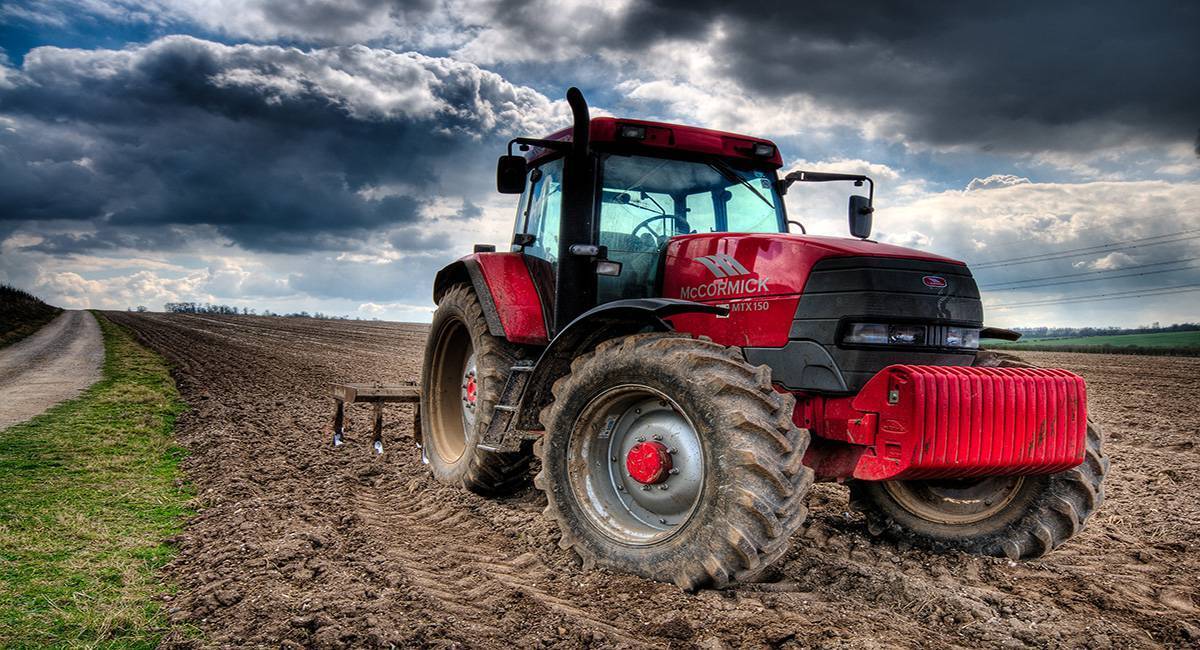
generic stock farming farm field tractor farmer crops
This year's budget is taking place in very unusual circumstances. The overall economy is under the cloud of Covid-19.
For the farming sector, the shadow of Brexit looms.
The next week is seen as the crucial one for talks between the EU and the UK. The omens are not good.
The recent analysis from the London School of Economics didn’t offer much solace. Even the most benign outcome would see our food exports take a 10% hit.
We will be maintaining our vigilance on this issue and we will be asking our Government to keep our concerns to the forefront.
It’s against this backdrop that ministers Paschal Donohoe and Michael McGrath will deliver their first budget together.
As the engine of the rural economy, the farming and food sector will be looking for strong support.
The Government must invest in agriculture and support farm incomes and viability by providing the maximum permissible level of national co-financing in the CAP Rural Development Plan post 2020. Following agreement on the multi-financial framework, Ireland can now co-finance Pillar II schemes up to 57%.
It is vital that the Government provides this level of co-financing. The commitment in the Programme for Government Our Shared Future for a ‘new REPS-2 programme’ must be in addition to the national co-financing commitment from the Government.
We want to see the rollover of all farm schemes in CAP transition — ANC, GLAS, TAMS, suckler cow (BDGP & BEEP-S), sheep welfare, and organics.
The renewal of all farm tax reliefs is very important to facilitate investment and generational transfer.
Now that we have the Climate Bill published, it’s time to get on with the roadmap set out as part of the Teagasc MAC Curve. With the right supports and incentives, farmers can continue to play our part in the national effort by improving the carbon efficiency of our output.
One of the real frustrations for farmers is the absence of credit for the carbon they are sequestering on their farms. We need to look at the net carbon position on farms that takes into account carbon offset as well as carbon emitted.
A new study in New Zealand shows what is being measured in a country with a similar demographic and farming profile to Ireland.
The report shows that NZ farms are offsetting substantial amounts of the carbon they are producing. This demonstrates what farmers in Ireland can do; if they are supported to adopt enhanced emission efficiency measures and are credited for the carbon they are already sequestering in hedgerows.
The Bill does recognise the cyclical nature of methane in GHG emissions accounting methodology.
IFA has made this point strongly to Government and the IPCC over the past year. It is positive to see this being acknowledged, but we need the inventory calculations to be changed to reflect this.
It is very frustrating to see widespread scientific acknowledgement of the need to change the calculation system, but at the same time we are told the system can’t be changed until 2030. This makes no sense.
The vote in the European Parliament that 'emphasises that the EU-Mercosur agreement cannot be ratified as it stands' shows that the mood is turning against a deal.
The vote — 345 to 295 — is the latest statement of opposition to a deal that fails the test of meeting EU standards.
At a recent informal EU Farm Council meeting, the German agriculture minister Julia Klockner, who chairs the Farm Council, said she was sceptical the Mercosur agreement could be ratified in its current format.
In June, the Dutch Parliament asked their Government to notify the European Commission that Netherlands withdraws its support for the Mercosur agreement, citing an increase in unfair competition for European farmers and a lack of enforceable agreements on protection of the Amazon or prevention of illegal deforestation.
Last month, Tánaiste Leo Varadkar indicated that he will not be bringing the Mercosur agreement for ratification to the Dáil this year, or for the foreseeable future.
Finally, I want to congratulate Mairead McGuinness on her formal ratification to the European Commission.
We are at a very sensitive point in the Brexit negotiations. There was never a greater need for a strong and authoritative Irish nominee at the Commission table.
Ms McGuinness will bring a credible and experienced voice on agriculture to the discussions, which will be crucial in defending our position as the talks head towards a conclusion. We wish her well in the new role.