Deal or no deal, Brexit will be difficult for everyone
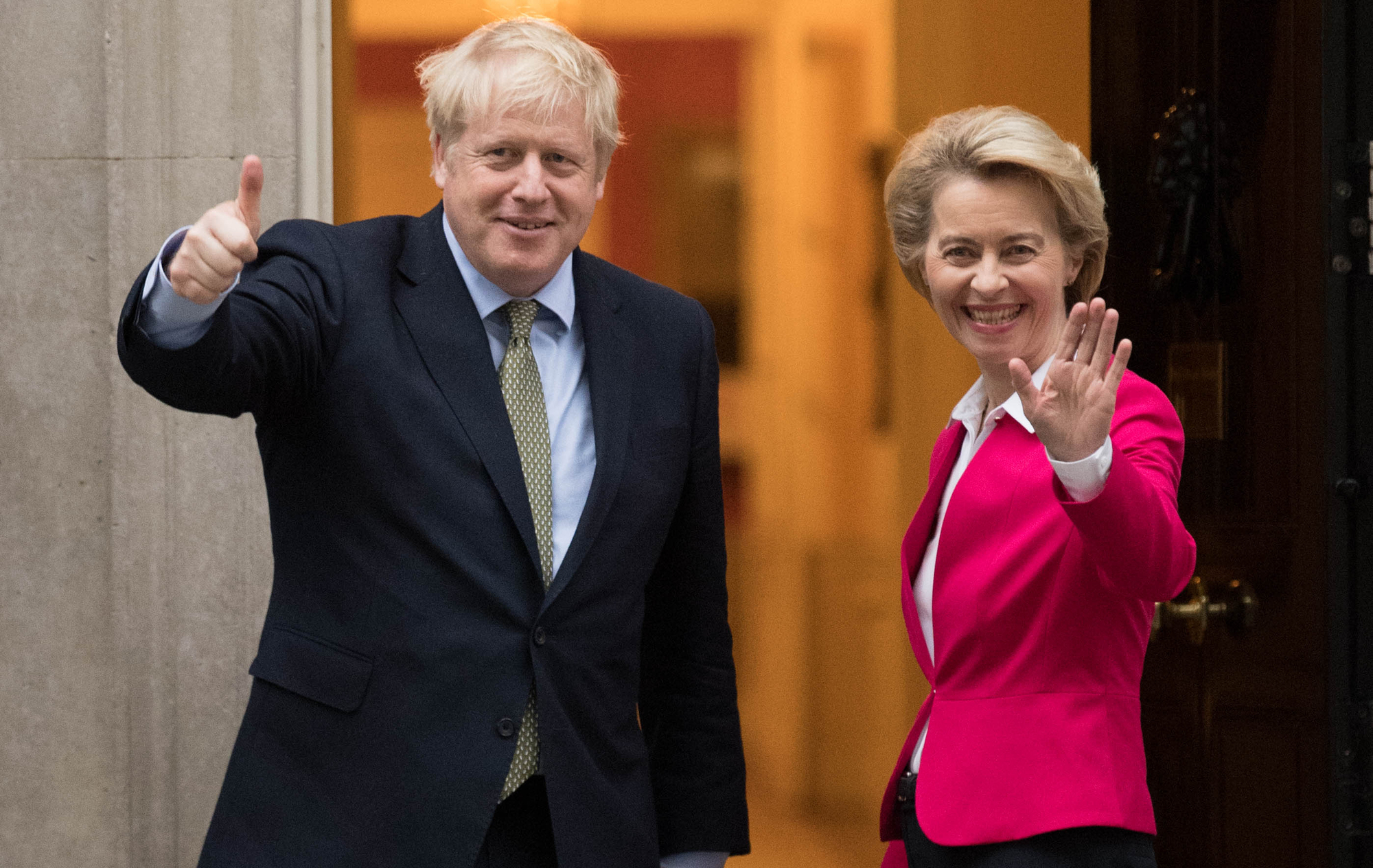
Boris Johnson and Ursula von der Leyen: even if their negotiators agree a trade deal, Ireland's food exports are predicted to fall 11.1%. Picture:
Even with a free-trade agreement, Ireland’s food exports are predicted to fall 11.1%, and imports from the UK by 12.6%, said the London School of Economics and Political Science in its recent Vulnerabilities of Supply Chains Post-Brexit report.
With a no-deal Brexit, Ireland is also the worst affected EU country, predicted to have a 30% reduction in its total food exports (43% of which currently go to the UK).
The no-deal fall in Ireland’s imports from the UK is expected to amount to 33.6% of our current imports.
With a free trade agreement, the food trade between the UK and EU will be slashed by almost a quarter in both directions.
The sectors most likely to be impacted, in order of current EU-to-UK export turnover, are fruit and vegetables, beef meat, pig meat, dairy and wine.
For the EU sectors of beef, pig, and sheepmeat, the reduced export of final products to the UK will result in higher cost, loss of trade flow, and oversupply in the EU.
Even with a trade agreement, some EU trade in fresh beef to the UK may no longer be feasible, due to border delays.
Dairy exports from the EU to the UK are estimated to fall by 18% under a free trade agreement and by 94% under a no-deal scenario (with exports of yoghurt, buttermilk, dairy spreads, milk and cream likely to cease).
The London School of Economics (LSE) said their estimates for Ireland should be treated with extra caution, because a significant proportion of the trade between Ireland and the UK is likely to happen at the Ireland-Northern Ireland border, with the goods remaining on the island.
This trade is likely to be considerably less affected, with the Northern Ireland Protocol ensuring goods move between the two countries not subject to border controls, and not subject to tariffs, if they are for domestic use and not for re-export.
The LSE report authors said, “As we look ahead to the end of the transition period, it is clear that a free trade agreement will go a long way to minimise disruption and the impact in the food sector and on consumers.
“However, even in the case of an FTA, significant barriers to trade will be imposed through non-tariff barriers which will still negatively affect the sector.
“But our report also shows that there are urgent and specific actions that both the UK and the EU need to take to ensure the industry is supported in the short and longer term.”
On January 1, Brexit is on course to bring a limited free trade agreement (FTA), or a no-deal Brexit that would leave EU-UK trade on World Trade Organisation terms, which means the introduction of tariffs and quotas on trade into and out of the UK.
Non-tariff barriers will apply, whether there is a deal or not.
For example, import declarations alone could cost traders from both the UK and EU approximately €4.4 billion a year (£4 bn).
Estimates of the cost of compliance with rules of origin checks, when importing into the EU, are found to be in the range of 8% of the value of the underlying good, with a significant portion of this cost (85%) being a result of extra paperwork.
The average no-deal tariff when exporting food and beverage products from the EU to the UK will rise from 0% to 17.7% when accounting for charges per weight, volume, and concentration and weighting by the value of imports of each product.
Some of the reduction in trade between the UK and EU will be offset by increased trade with other countries and/or domestic production.
But in the short run, many businesses are expected to continue operating within existing supply chains for some time, absorbing the cost of tariff and non-tariff barriers.
Price increases are expected in the short run.
Operators have begun increasing stock in preparation for a no-deal Brexit, but the end of the transition period coinciding with Christmas will strengthen the negative impact of tariffs.
Lack of clarity on border arrangements will amplify disruption, deal or no deal.
Consumers who expect that local production will be readily available to replace imported items may discover producers are unable to cope with increased volume demand.
In a no-deal scenario, some EU companies may move production to the UK to avoid tariffs, but such greenfield projects could take two or three years, and substantial investment.
In the UK, the average price increase for branded and speciality products from the EU, with a free-trade agreement, is estimated to be 9.9%, and 26.5% under a no-deal scenario.
In the EU, the average price increase for branded and speciality products imported from the UK under an FTA is estimated to be 8.5% and under a no-deal to be 27.9%.
Tariffs present the highest potential cost, and tariff-free trade is crucial to avoid the most negative effects of Brexit on the food supply chain and consumer choice.
A no-deal Brexit would devastate the UK food sector.
Boris Johnson’s government must decide whether to maintain high tariffs at the expense of consumers; or reduce tariffs and allow global competition undermine UK food and drink producers.
The LSE report also says consumers in the UK are highly exposed to changes in the future trading relationship, because 40% of all food in the UK comes from EU countries.
But consumers in the EU may also notice increased prices and reduced availability of products from the UK.
LSE recommendations to ease the Brexit impact include extending the transitional period for product categories most at risk; avoiding blanket application of tariffs and seeking exclusions for specific products; and applying procedures with leeway so perishable foods does not get stuck at borders.