Pork market shocks expected after China bans €1bn of German pork
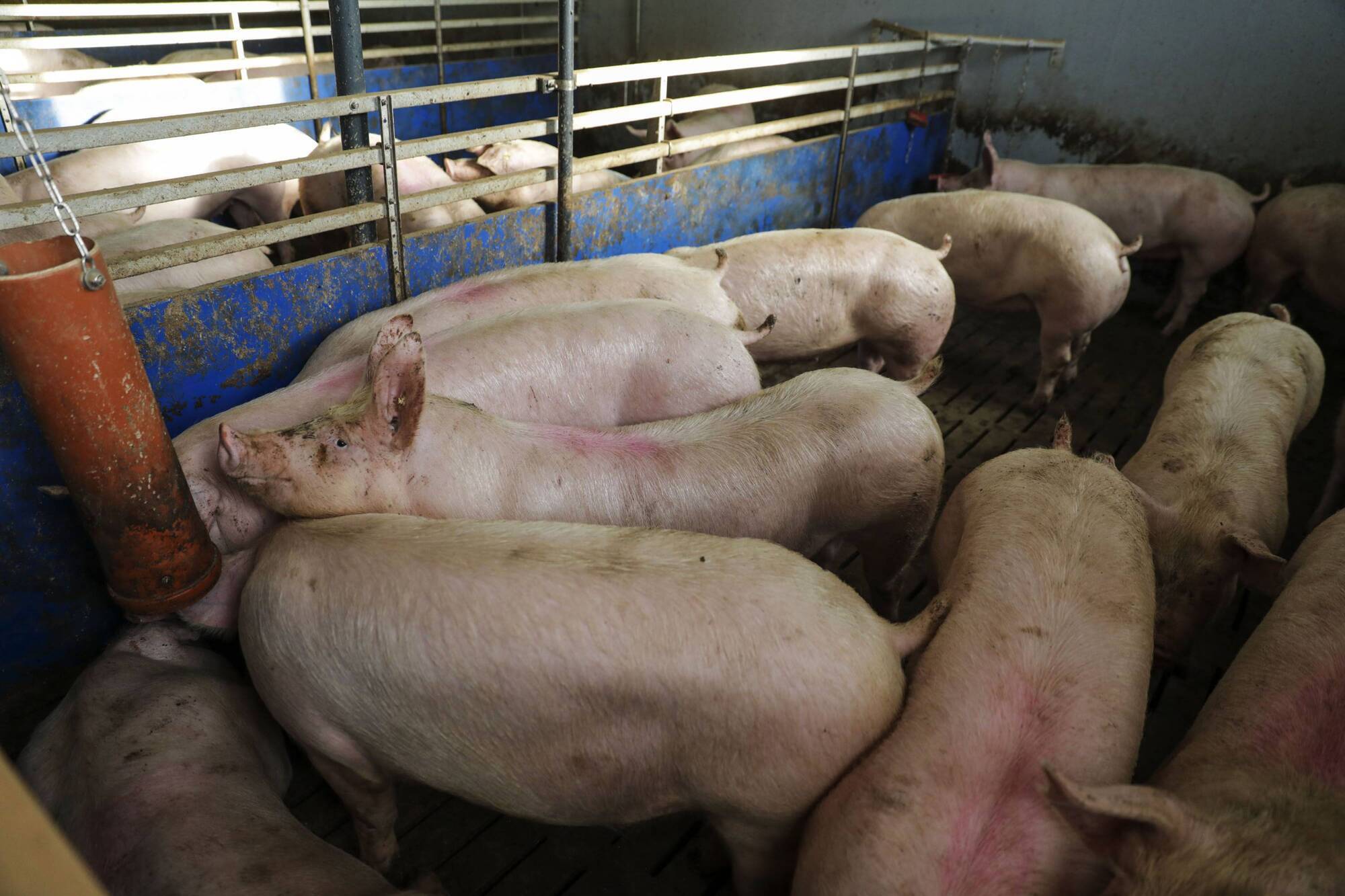
China said the pork ban was intended to "prevent the spread of the disease”
Pork market shocks expected after China bans €1bn of German pork

Despite its relatively small size compared with producers like China or the US, Germany is a heavyweight in the global pork trade -- accounting for 15% of the world's exports in 2017. Picture: Alex Kraus/Bloomberg

Pig farmers throughout Europe are braced for a market shock due to most of the €1bn of German pork imports banned by China ending up on the EU market.

Germany is the third biggest pork supplier to China, but when Germany reported its first case of African swine fever (ASF) last week, China banned its pork immediately, in what political and trade analysts said was a warning to Europe not to defy Beijing on a range of issues, ahead of Chinese president Xi Jinping’s video meetings this week with EU leaders.

China said the pork ban was intended to “protect the animal husbandry industry and prevent the spread of the disease”.

However, ASF is already common across China and has decimated its pig population in recent years.

Analysts said the pork ban fits a pattern of “coercive diplomacy” in which Beijing imposes trade and investment restrictions on countries it has diplomatic disagreements with.

China accounts for around half the world’s annual pork consumption, and takes almost two thirds of Germany’s pork exports.

Only the US and Spain are bigger pork suppliers to China.

German pork exports to China increased to €835m in the first half of 2020, compared with €1.2bn for all of last year.

Chinese pig herds have been decimated by ASF, and pork prices there have more than doubled in two years.

South Korea, Japan, Singapore, the Philippines, Argentina, and Brazil are among other countries to have banned pork from Germany, now that it has lost its disease-free status.

Red meat market analyst Bethan Wilkins of the UK’s Agriculture and Horticulture Development Board said the extra pork volume available in the EU due to the German export ban will not be large “by historic standards”, because the EU has been sending much increased volumes of its pork to China in the past 18 months.

There may be 780,000 tonnes earmarked for export now remaining in the EU.

Supplies on the EU market would be a little higher than 2019 levels (up 1%), but still below 2015-2018 supplies.

Ms Wilkins said exporting pork to China is particularly attractive for EU processors because less processing is required on the products in the EU, which is especially welcome at present when EU processing capacity has been challenged by coronavirus regulations and outbreaks.

At the other end, China has an excess of processing capacity due to its own ASF situation.

German farming representatives urged China to avoid a nationwide ban on imports of their pork, and the agriculture ministry said it had asked Beijing to apply a regional approach to the swine fever case.

This is the approach within the EU, with other member states accepting pork only from non-affected regions of Germany.

Meanwhile, other EU states may pick up some of the slack left by the loss of German supplies in China.

This includes Ireland, for which China is by far the largest export market for pigmeat, taking 45,500 tonnes so far this year, up 9% on the same period last year.

However, they will face very stiff competition from dominant exporters such as the USA and Brazil, with the latter’s exports now boosted by a currency devaluation.

The ban on German pork in China may reverse increases in the EU’s agri-food trade in the first five months of 2020, achieved despite Coronavirus and Brexit threats.

Continued strong exports of EU pork and wheat were major contributors, and China is the No 3 destination for EU agri-food products, reaching €14.5bn per year.

Meanwhile, the deadly pig disease (which poses no risk to humans) continues its inexorable global march.

The area of the EU affected by ASF is “progressively expanding”, said the European Food Safety Authority in its latest update on the disease.

Between 2016 and June 2020, 1.3m pigs were lost to ASF in Europe.

Depopulation is the only option when ASF enters a herd (there is no cure or vaccine).

Twelve EU Member States have ASF.

Domestic pig outbreaks have continued in Lithuania, Latvia, Poland, Romania, Bulgaria and Slovakia.

Greece had one case last February.

Only wild boars are infected in Hungary, Estonia, Belgium, and the Czech Republic.

Several more wild boars in the German state of Brandenburg have tested positive for ASF after the initial detection.

Germany has the second largest pig industry in the EU, following Spain, with a pig population in excess of 26m.

If ASF gets into Germany’s domestic pig population, it would have severe consequences for the sector.

Already, pig prices in Germany fell from €1.47/kg of slaughter weight before ASF, but have steadied at €1.27

The Germans have been well prepared, with the disease rampant just across the border in Poland, where a 6,500-pig farm was recently wiped out. And its spread is less likely in the Brandenburg region, which has a low pig population.

Here, the Department of Agriculture said ASF in Germany serves as a warning signal that the disease remains a constant threat to Ireland. “Vigilance is key to preventing an outbreak here and biosecurity measures must continue to be implemented.

“Pigs should never be fed or have access to food waste.

“Anyone coming from an ASF affected area of the world should observe a pig free period of 72 hours before coming into contact with pigs in Ireland.

“Pig owners should also ensure that biosecurity measures are implemented to prevent pigs coming into contact with contaminated vehicles, equipment, clothing and footwear.

Further information regarding ASF and biosecurity measures is available on the DAFM’s agriculture.gov.ie website.

n Comment: page 3

x

More in this section

Farming

Newsletter

Keep up-to-date with all the latest developments in Farming with our weekly newsletter.

Cookie Policy Privacy Policy Brand Safety FAQ Help Contact Us Terms and Conditions

© Examiner Echo Group Limited