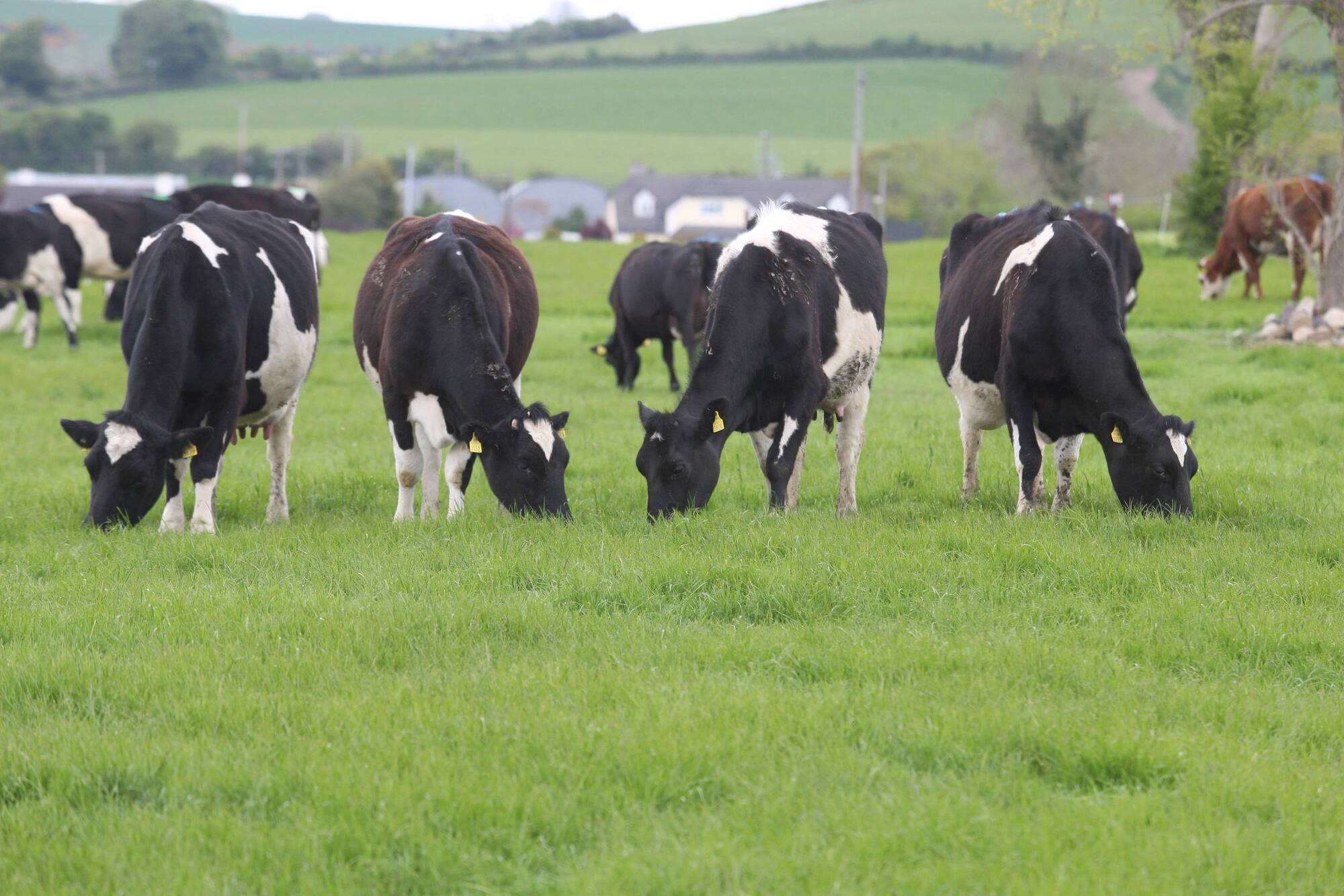
With over 6,000 dairy farmers participating in derogation, it is timely for a reminder of the practices that you need to adopt or continue to comply with under the derogation scheme.
Two key practices that must commence in 2020 are:
- a programme of lime application should commence if soil sampling indicates that it is necessary.
- to improve farm biodiversity, at least one mature whitethorn or blackthorn tree should be left per 300m of hedgerow, or hedgerows maintained on a three-year cutting cycle, to encourage flowering and fruiting.
Other practices that derogation participants must engage in include:
- low-emission slurry spreading (LESS); from now on, LESS is mandatory on derogation farms.
- concentrate protein level: when cows are on full-time grazing, protein content of the concentrate must be no more than 16%, and 15% in 2021.
- environmental training course attendance; all derogation farmers must attend a course by the end of 2021.
- grassland management; attend a grassland management course by the end of 2021, or complete 20 grass measurements on PastureBase.
- include clover seed in the mix when reseeding.
- lands declared as commonage or rough grazing on the Basic Payment Scheme application are allocated a maximum of 170kg organic nitrogen (N) per hectare, with a resultant reduced allowance of chemical fertiliser.
More detailed information on derogation rules is available from your Teagasc advisor.
Lime status
What is all the fuss about lime? Why do people constantly recommend that you need to get the lime status of your land right?
Well, it’s because lime is a fantastic fertiliser.
Dairy specialist Stuart Childs has some advice and guidance.
Tillage farmers really know the benefit of lime, as they see the immediate impact of incorrect soil pH in crop yields.
This drop in yield happens in grassland too but, because the crop isn’t harvested in one take, it can be overlooked.
Applying lime:
- Improves the availability of phosphorus and potassium.
- Improves biological activity which will in turn improve nutrient supply from soil organic matter.
- Increases earthworm activity which will improve soil structure, aeration and drainage capacity.
- Increases the persistency and competitiveness of productive species within the sward, helping to reduce weeds.
- Increases the supply of calcium and magnesium for grass and livestock.
- Releases N from the soil equivalent to 50-60 units/acre per year.
Yet, we only spread less than one third of the amount of lime that was spread at the peak time of spreading, in the early 1980s.
Lime is a forgotten fertiliser, all too often the plan to ‘get the lime out’ in the back end of the year gets undone by Mother Nature.
There is no plan B. The question must then be asked why are we waiting?
Lime can be applied at any stage of the year, so we should be looking at every opportunity to spread.
August and September are good months for getting lime out on grazing ground, as rotations extend and ground conditions remain good.
Lime is a really high return investment (€6 for every €1 spent) and available for everyone with no restrictions on how much you want to buy or when you are allowed to apply it. Yet it’s a completely underutilised product on Irish farms. So, ‘Just do it’, start getting your soil pH right now.