Stephen Cadogan: EU’s Common Agricultural Policy is ill-equipped to address a severe market crisis
It’s just a couple of weeks since Ireland started getting serious about coronavirus, but price cuts of 10c-15c/kg at beef factories, and 60c/kg at sheepmeat factories already show how badly farming will be affected.
Stephen Cadogan: EU’s Common Agricultural Policy is ill-equipped to address a severe market crisis

It’s just a couple of weeks since Ireland started getting serious about coronavirus, but price cuts of 10c-15c/kg at beef factories, and 60c/kg at sheepmeat factories already show who badly farming will be affected.


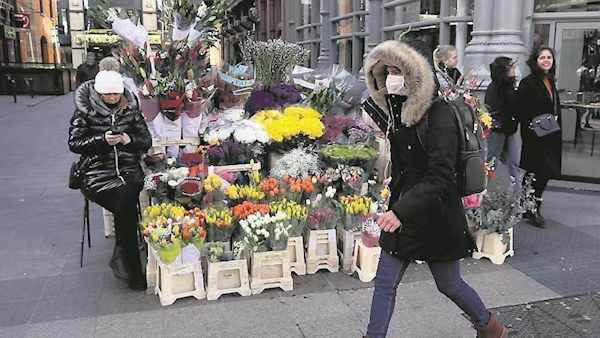
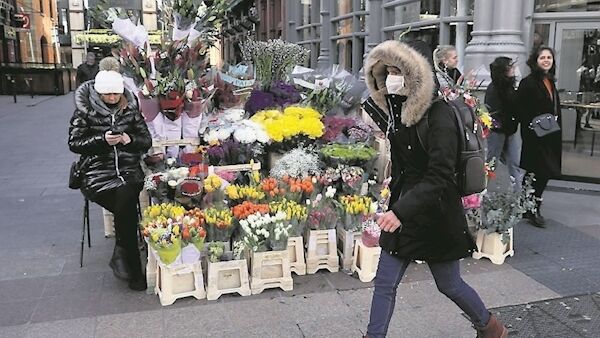
Most farmers are not hit as hard yet as fishermen, or the flowers and ornamental plants sectors.

Anyone depending on sales to restaurants has lost their market.

But the worst is yet to come, predicts the Farm Europe think tank of agronomists, economists, political advisors, adminstrators, legal experts, and scientists, a knowledgeable group that aims to stimulate thinking on rural economies in the EU.

They are probably right, when they say the Covid-19 crisis will evolve into a full-blown economic crisis, as a result of the closure of so many economic sectors.

Some countries will be more impacted than others, but all will suffer, and the EU will face a steep recession.

It’s a setback for farmers cheered up by the late arrival of spring, and by the school and college closures which brought plenty of welcome helpers back onto farms.

Things looked positive for a while, but this week’s price cuts have alerted farmers to the dangers ahead.

Up next, according to Farm Europe, is probably a recession which will cause a further reduction of demand for agriculture products, and a shift of demand to cheaper products.

And there is no escape valve through exports, because it is a worldwide crisis.

What have the Government, and the EU (which controls the purse-strings, through the Common Agricultural Policy) done to avert the threat to the farming and food sector, rightly classed by our government as an essential sector?

Not much, yet, relative to the enormous threat.

Collectively, the Government is making a good job of the huge task to protect citizens as best as possible from the virus.

That has to be the main objective.

The economy will be partly protected by the new payments to support employers and employees affected by the pandemic.

That will help all business sectors, including agriculture, which depend ultimately on domestic consumer spending power.

In sharp contrast, the mighty European Union has been feeble in its response to the pandemic.

The European Commission has channelled cash through cohesion funds and the European Solidarity Fund to the most affected EU countries.

But arguments between the commission and member states are slowing more decisive responses.

The EU’s notoriously slow decision making resulted in EU leaders last week allowing two weeks for a recovery plan to address the economic consequences of the pandemic.

It’s business as usual, while Europe burns.

The response for agriculture has been pathetic.

The deadline for farmers to apply for CAP payments was extended, as if farmers in lockdown won’t have enough time to fill out the forms by the original deadline in mid-May.

The EU relaxed limits on how much state aid countries can pay to help the farm and food industries.

That’s all very well for the richest member states that can afford to help the sector our of their national exchequers.

The EU issued guidelines on “green lanes” to facilitate the flow of agri-food products within the EU single market.

Guidelines only, it’s up to member states to obey them, and many seem to have ignored them, not least Hungary’s far-right populist government, which shut borders and had 18 miles of traffic from Austria backed-up last week.

“Whatever measures we are applying now, we have to be very prudent as we are only at the start of the crisis”, said commissioner for agriculture Janusz Wojciechowski. So, business as usual, but the problem, according to the Farm Europe thinktank, is that the EU’s Common Agricultural Policy is ill-equipped to address a severe market crisis.

The intervention triggers before surplus produce would be bought up and put into storage are much too low to meaningfully support markets.

The Common Agricultural Policy’s existing risk management tools were put in place in 2013, and are designed to cope with market volatility, but not a deep crisis.

Farm Europe says it is crucial that the EU moves swiftly to create a real crisis reserve, which has been proposed by the agriculture committee of the European Parliament.

Such a reserve could allow the commission to intervene quickly, to balance markets by the best means available, such as reducing supply, and compensating farmers for the output loss.

As it is, the only crisis reserve is one generated by deducting money from farmers’ direct payments, the last thing they need, as they face the pandemic crisis.

Compare the EU’s dithering with the decisiveness in the US.

There is public condemnation of President Trump’s apparent approach to the pandemic. It remains to be seen if such condemnation is justified.

But what is sure is that the US government has freed up a river of cash to help the country recover, in its $2tn stimulus bill.

President Trump signed the record-breaking coronavirus stimulus package into law last Friday, after it was passed by the House of Representatives.

Out of its funding, there’s $49bn extra for the agriculture budget, for responding to the pandemic, including $14bn to replenish the Commodity Credit Corp, a Depression-era programme designed to stabilise farm incomes, and $9.5bn to support producers of specialty crops, livestock and dairy, as well as those who supply farmers markets, restaurants and schools.

This relief package comes on top of two previous aid packages to compensate for the losses of US farmers in the US-China trade wars.

There’s no such compensation in the EU, where farmers and food exporters affected by the US retaliations on the Airbus dispute, have been left to fend for themselves.

It won’t be a big surprise to EU farmers if they have to wait until the eleventh hour for real EU help.

In the previous market crises, twice in the dairy sector, and in the fruit and vegetables sector, the EU didn’t intervene until the crisis had fully developed, and their intervention therefore cost more in the end, and at the cost of increased pain for the farm and food sectors.

After agriculture ministers of the EU-27 met by video conference last week, commissioner for agriculture Janusz Wojciechowski said member states expressed various concerns such as the risk of not being able to comply with CAP- related administrative procedures, or logistical issues that could jeopardise the functioning of the food supply chain.

He said the Commission offered the necessary flexibility and simplification within the CAP in these times of crisis, and he will closely monitor the evolution of the situation, and stands ready to further act if required.

It sounded like kicking the can down the road.

x

More in this section

Farming

Newsletter

Keep up-to-date with all the latest developments in Farming with our weekly newsletter.

Cookie Policy Privacy Policy Brand Safety FAQ Help Contact Us Terms and Conditions

© Examiner Echo Group Limited