Compelling business case sent to Government, as Gas Networks Ireland starts using farm gas
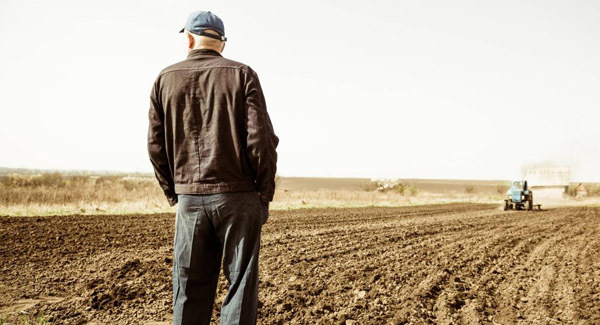
A shot in the arm for the rural economy, including over 3,000 jobs, and a strategic national opportunity; that’s what’s on offer to the Government from an agri-led “green gas” industry, said the Renewable Gas Forum of Ireland this week, which represents some of Ireland’s largest energy users.
The forum includes leading food and pharma companies, for whom this renewable gas is the only viable way to decarbonise.
Research conducted by KPMG for the forum has revealed a compelling business case for establishing an Irish biomethane industry based on agricultural waste.
With 100,000 beef farmers struggling to even break even, not to mind make a profit, farmers are more than ready to play their part in biomethane plans, which Gas Networks Ireland (GNI) says can reduce Ireland’s carbon dioxide emissions by one third.
GNI owns, operates, builds and maintains the natural gas network in Ireland, and is forging ahead with their decarbonisation plans, including renewable gas from farms.
Separately from this week’s Gas Forum of Ireland business case presentation, GNI has presented its plan for a combination of technologies to make its gas network carbon-neutral.
Renewable gas, mostly coming from agriculture, is perhaps the most straightforward of these technologies, with GNI also favouring compressed natural gas, carbon capture and storage, and hydrogen.
Renewable gas from agriculture is a proven technology across Europe.
It comes from 600 anaerobic digestion plants (AD) plants in the UK. and nearly 9,000 in Germany.
They are typically operated by farmers and are fuelled by grass, maize, beet, and manure, producing a gas which is 50% methane and 50% carbon dioxide.
According to a European Commission assessment, Ireland has the highest potential in Europe for production of such renewable gases from agriculture.
GNI says 20% of the gas on their network could be from renewable sources by 2030.
Renewable gas was successfully injected into the GNI network for the first time earlier this year.
The biogas came from the anaerobic digester attached to Billy Costello’s 3,000-sow pig farm at Nurney, Co Kildare.
It is fuelled by pig slurry, and 2,000 tonnes of food waste per month, to generate enough biomethane to power 500 homes.
This gas was exported to Northern Ireland until this year, when Ireland’s Commission for the Regulation of Utilities Water and Energy allowed it be used in the south.
Biogas is an established renewable energy source in Northern Ireland, thanks to their feed-in tariff payment for biogas producers.
Similar support and subvention are needed for farm-based AD in the south, says GNI, which suggests the carbon tax collected from natural gas should go towards development of a renewable gas industry. The support would go directly to rural communities where anaerobic digestion plants are operating, and GNI is ready to bring the resulting renewable gas into their network.
GNI has submitted a planning application for a gas injection facility in Mitchelstown to Cork County Council, as part of its GRAZE (Green Renewable Agricultural and Zero Emissions) gas project.
The Mitchelstown facility could support up to 20 farm-based anaerobic digestion biomethane plants within a 50km radius, and once operational, would provide enough energy to heat more than 50,000 homes.
This could be a valuable alternative enterprise for farmers, especially the beef farmers whose livelihood is threatened by this year’s low beef prices.
Already facilitating Ireland’s excellent renewable energy from wind and solar sources, farmers are also ready to deliver anaerobic digestion biomethane, for a reliable natural gas supply needed alongside the intermittent wind and solar sources.
It’s therefore a project that ticks many boxes for the Government’s plans for decarbonisation, and energy from renewable sources.