Latest American dairy tech on show at World Dairy Expo
At this week’s World Dairy Expo in Madison, Wisconsin, over 2,300 cattle from North American farms will be judged in one of the world’s best-known dairy cattle shows.
The show also has the latest dairy equipment from more than 800 companies, which gives a good introduction into milk production technology in the US.
The event is especially popular with pedigree dairy breeders from Ireland, and they may be interested in a new product on how called ShowFresH2O.
It is a water treatment for show livestock that eliminates chlorine odours from municipal water. The manufacturer says show animals travelling from the farm drink less water than they need, because city water smells and tastes different, partially due to chlorine added for bacterial control.
Animals not drinking enough water can get dehydrated, and perform poorly.
In Ireland, adding chlorine one of the most commonly used and proven methods of disinfecting public water supplies, so show cows here might goof their water too.
Another product on show in Madison is the LactiCheck 3X which provides complete milk composition profiles (fat, solids, protein, etc.) in just 60 seconds. No reagents are required, a sample is simply poured into a convenient sample vial.
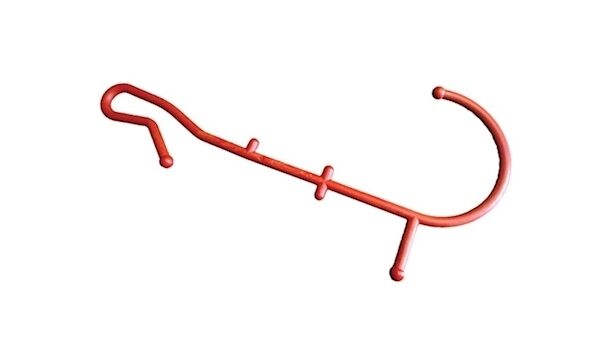
For just $50 (€45.70), visitors to the show can get a Hook Doctor from Ritchey Livestock as a souvenir.
US farmers use the large hook at one end to safely and humanely control an animal’s head by hooking the cheek. A small hook at the other end can be used for catching calves by the leg. US farmers use the Hook Doctor for procedures like tagging, administering boluses, and catching or sorting calves.
The show has a lot of equipment for DIY AI users.
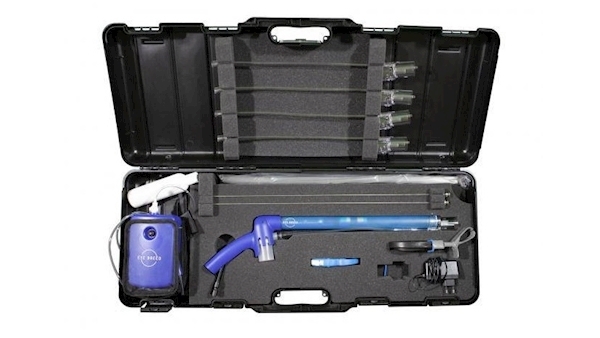
For example, the Eye Breed is a new breeding device for cattle to inseminate without rectal palpation.
Therefore, training and use of the equipment are easier, and the manufacturers say the equipment is better for the cow also.
It is a digitally connected tool that facilitates the operator’s work by registering the declaration of each insemination and analysing video sequences.
With most US dairy cows confined indoors, there is interest in how lighting systems affect cows.
Some Michigan State University research indicated milk production could be increased 8% by using long-day lighting.
They found better production when herds are exposed to stronger light for 16–18 hours, followed by 6–8 hours with weaker light.
The latest development in this area, on show at Madison, is a 70-watt enhanced blue dairy light.
It suppresses melatonin, and the DairyLighting company says it can increase milk production, fertility rates, activity and health.