Science helps Ireland meet greenhouse gas goals
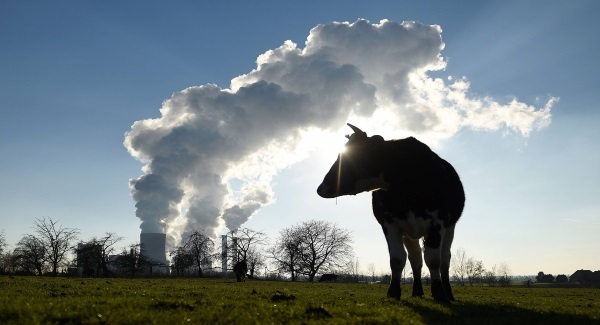
Informed science-based decisions on cattle breeding and fertiliser choices can help Irish agriculture meet its environmental targets, said Minister for Agriculture Michael Creed.

Science helps Ireland meet greenhouse gas goals

By Joe Dermody

Informed science-based decisions on cattle breeding and fertiliser choices can help Irish agriculture meet its environmental targets, said Minister for Agriculture Michael Creed.

The minister told a Seanad debate that grants for low-emissions slurry spreading can also help Irish agriculture cut carbon emissions by 33% by 2030, in line with environmental commitments under the Paris Accord.

Switching from calcium ammonium nitrate, a nitrogen product for fertiliser, to protective urea reduces the nitrous oxide release.

Senator Kieran O’Donnell, of Fine Gael in Limerick, questioned how Irish agriculture could reduce its carbon emissions by 25% while increasing the dairy herd. He also said it seemed contradictory that agriculture should be asked to deliver 33% of Ireland’s total greenhouse gas (GHG) reduction targets while Ireland’s grass-based dairy sector was one of the most carbon-efficient in Europe.

We face challenges in terms of climate change and emissions,” said Senator O’Donnell. “Agriculture is a fundamental element of that. What policy changes or shifts could be put in place to ensure that farmers are able to reduce emissions on their farms?

Minister Creed said Ireland and New Zealand are the world’s most carbon-efficient dairy producers. He added that Ireland’s beef sector is the fifth most carbon efficient producer of beef in the EU. However, given the relative absence of a heavy industry legacy in Ireland, agriculture has a higher profile here than in other EU states, thus accounting for the higher share in the carbon emissions.

He said Irish agriculture would continue to reduce emissions. He said retailers indicated in boardroom meetings during trade missions that they would pay premium prices for the sustainable products which are being sought by consumers globally.

Minister Creed said there is no silver bullet, but praised Teagasc for its work in bringing scientific expertise to Ireland’s plans to reduce carbon emissions. He also cited the €300m being spent on the rural development programme to 2020, to improve the genetic merit of the Irish beef herd.

“The herd will have a smaller suckler cow but a bigger weanling,” said Minister Creed. “It will have a cow that is in calf every year and that calves easily. This knowledge will enable the farmer to make breeding decisions on the herd that will improve the profitability but drive down the farmer’s carbon footprint as well.”

He cited similar state-funded milk recording programmes which are also being used to reduce the dairy herd’s carbon footprint.

“If we have a herd that is more and more genetically efficient, then we will be able to reduce further the carbon footprint of our dairy output,” he said. We need to bear in mind the context of the Paris Accord and the framework within which we are operating legally. The Paris Accord holds that we must reduce our carbon footprint, but that is in the context of not compromising food production.”

x

More in this section

Farming

Newsletter

Keep up-to-date with all the latest developments in Farming with our weekly newsletter.

Cookie Policy Privacy Policy Brand Safety FAQ Help Contact Us Terms and Conditions

© Examiner Echo Group Limited