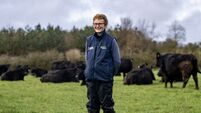
Experimental sugar beet grown in Co Cork
The results of large-scale sugar beet experimental field trials conducted in Cork will help determine if the crop can be revived in Ireland.
Plant biotechnologists at NUI Galway have used the trial results to make progress towards more sustainable sugar beet crops, for production of bio-based products from sugars that can displace fossil-fuel derived products.
Using molecular genetics laboratory work, and the trial results in Co Cork, they have identified genetic breeding strategies to develop bigger and better sugar beet varieties, that can produce more food, using less resources and land area.
Professor Charles Spillane, director of the Ryan Institute at NUI Galway, said: “We need to consider sugars not only as ingredients for sweetening of foods, but also as the molecules upon which a more sustainable sugar-based bioeconomy can be developed, that produces multiple bio-based products from sugars.
“Sugar beet processing factories are now designed as sugar beet bio-refineries where sugar is but one of the many bioproducts generated, along with many non-food products such as specialty high-value chemicals, bio-based materials and bioenergy that can displace fossil-fuel derived products.
“Sugar beet bio-refineries in Ireland can play an important role in decarbonisation pathways in Ireland to reduce carbon and resource footprints in the agri-food sector.”
PhD student Brendan Hallahan, a researcher on the sugar beet work at NUI Galway, said: “Next generation varieties of the humble sugar beet crop can be an asset for sustainable development in both Ireland and the EU, if research can continue into plant genetic improvements, combined with the establishment of modern bio- refineries.”
Working closely with the KWS SAAT international plant breeding company, the NUIG researchers were funded by Science Foundation Ireland and the Irish Research Council.
Their findings are a boost for groups such as Beet Ireland which want to re-establish sugar beet as a sustainable and eco-friendly crop in Ireland.
The sugar beet industry was a major economic success story in post-independence Ireland, but changes in the EU’s sugar subsidies in the early 2000s led to the closure of Ireland’s last sugar beet factory in 2006, and the effective end of large-scale sugar beet farming. In 2017, the possibility of resurrecting the industry was boosted by abolition of EU sugar quotas.