Many dairy farmers say this summer is better than rainy 2012
Agricultural consultant and land agent Michael Brady puts drought in perspective for dairy farmers, writes Eoin McCarthy.
Many dairy farmers say this summer is better than rainy 2012

Agricultural consultant and land agent Michael Brady puts drought in perspective for dairy farmers, writes Eoin McCarthy.

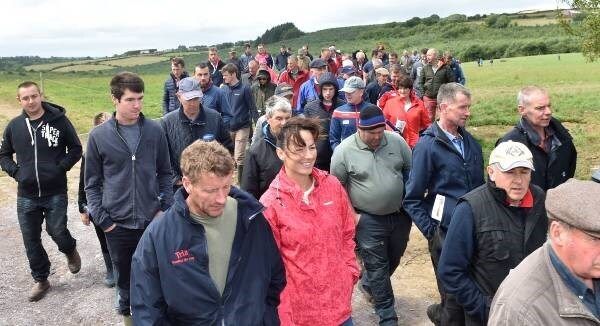
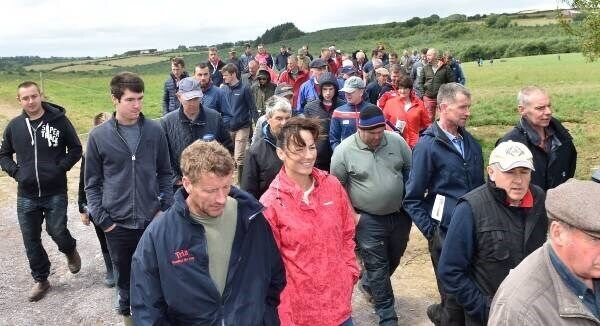
A section of the large crowd at the Bandon Co-Op/Carbery/Teagasc Carbery milk quality winner farm walk on the farm of Pat, Theresa and James O’Neill at Clohane, Bandon, Co Cork. Picture: Dan Linehan

After at least half an inch of rain nearly everywhere in Ireland in the past 10 days, and up to two inches in some places, farmers have had some relief — temporary at least — from drought worries.

But, if it dries up again, or gets too wet, have we too many dairy cows for coping with unpredictable weather?

“No”, says agricultural consultant and land agent Michael Brady.

We do not have too many dairy cows and there is no link between the fodder crises and the amount of dairy cows, he says.

“In my opinion, the straightforward answer is no, if we are just talking about dairy cows, I would say absolutely no.

“Relating fodder crisis to the Beast from the East, and the current drought to the amount of dairy cows, is rubbish, because we have fewer cows today than we had back when quotas were introduced.”

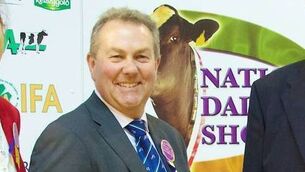
Michael Brady
Michael Brady

We now have 1.4 million dairy cows. In 1984, when milk quotas were introduced, we had 1.55 million dairy cows.

“If we are looking specifically at dairying, any of those linkages don’t make any sense, because we have fewer cows now than we had in 1978, we are kind of back to where we were in 1988 with cows.”

“The straightforward answer is we have too much badly farmed land in the country, that’s the biggest issue”

“You only have to get a train from Dublin to Cork and look out the windows on either side, and you will probably find that 60 or 70% of the land that you will see is badly farmed, not fertilised properly, not the proper grass seeds, that’s the biggest issue really.”

“That’s the reality. You have to ask yourself the question why is there so much land badly farmed?”

“I think there are 139 or 140,000 single farm payment applications in the country, break that down, there are only 16,000 or 18,000 dairy farmers, there’s around 4,000 arable farmers, the majority of farmers are beef farmers.

“There are over 80,000 beef farmers in the country and the reality is that beef as an enterprise doesn’t make money, no matter how good a farmer you are, it doesn’t make significant money, so most of those guys are hobby farmers and all they are doing is farming the land to draw their subsidies, so there is no incentive to farm it properly.”

“Define what farming it properly is?

“From my perspective, it would be having the land accessible for stock, fenced, reseeded, fertilised properly, and growing high tonnages of grass and utilising it to feed livestock.

“I think, off the top of my head, we are growing somewhere around seven tonnes of dry matter per hectare on average in the country, but the best operators are growing 18 tonnes.

“Now, all the land isn’t top quality land, I will accept that, but the majority of land is just badly farmed, that’s just the reality of it.

“If you are a hobby farmer and you have 100 acres, and your hobby farming is a beef enterprise, it doesn’t matter whether you have 10 cattle or 100 cattle on it, you will make the same money”

Coping with drought conditions was on the agenda at Tuesday’s Bandon Co-Op/Carbery/Teagasc milk quality winner farm walk on the farm of overall quality winners Pat, Theresa and James O’Neill, Clohane, Bandon, Co Cork. Picture: Dan Linehan

Mr Brady optimistically predicts 2018 profits in dairying will be robust enough to cover the unforeseen costs resulting from the heat wave — costs which the accountancy and financial advisory firm IFAC put at €2.50 per dairy cow per day for feeds to replace grass.

He predicts “an absolute boom of fodder for six or eight weeks”.

“This year is not a bad year from a price point of view, and profits won’t be that bad, in my opinion.

“When it all pans out at the end of the day, what is happening at the moment is grass has slowed down to almost a standstill, so fellows are having to feed the winter fodder that they have conserved for next winter, which means that they will have less silage for next winter, which means they will have to replace that.

“Yes, it is going to cost them, but the profits of dairying are strong enough to take it in most businesses.

“Farming by its nature is volatile, there is price volatility and there is weather volatility.

“I think the key point is that a good farmer has to be robust and resilient from a financial point of view, from the technical and physical point of view, but finally from a mental point of view as well.”

“There are two types of farmer out there.

“Farmer A was all worried and moaning and complaining and praying for rain, and every day he doesn’t get rain, he was getting more depressed.

“Farmer 2 was looking at the overall scenario, assuming that he is going to get no rain, and he was putting plans in place to cover that.

“The second farmer can get out of bed with a much clearer conscience in the morning.”

Mr Brady advised farmers to plan for a third silage cut.

He also highlighted the importance of a national fodder survey.

“Probably at the end of August or the end of September, it will be vital at that point in time to do a national fodder survey.

“What I would say is, treat the country as one farm, let’s say you are the farm manager, the same thing you would do on any individual farm, see how much fodder you have and see how much fodder you require, and at that point in time, we decide whether there is enough fodder in the country to feed the cattle.

“If there isn’t, we have to import it, simple as.”

“To me, there are worse challenges than this.

“Most farmers I speak to would take the weather we have now over the wet weather we had during the summer of 2012, any day of the week.”

To prevent another fodder crisis, he says farmers must implement short term and medium to long term plans.

Reducing livestock numbers is an option of last resort, he says.

x

More in this section

Farming

Newsletter

Stay ahead of the season. Sign up for insights, expert advice and stories shaping Irish agriculture.

Cookie Policy Privacy Policy Brand Safety FAQ Help Contact Us Terms and Conditions

© Examiner Echo Group Limited