Stress grows as silage and grass dwindle away
The most common question to me over the last week was “How do I manage with less or no grass silage in diets?”
Unfortunately, all around the country, farms are running out of fodder, and replacement stocks are harder to come by.
Grass is not growing, and the prospects of growth in the next 10 days or so look poor.
Cold days and nights are keeping soil temperatures well below normal.
The Beast from the East, our friend from Siberia, looks like returning over the coming weekend, bringing more very cold conditions.
There is no doubt that growth will come, but when?
Very few beef cattle have been turned out yet.
When turnout does happen, most will need to delay the end of the first rotation until the middle of April at least, if they hope to remain outdoors fulltime. In order to achieve this, they will need to slow down their rotation by either rehousing stock by night or supplementing grass with forage and/or concentrates.
It is also important to avoid damage to paddocks, in the effort to graze them tight. Any damage now will reduce the paddocks’ overall yield for the duration of 2018. To protect paddocks, some are considering zero grazing, where it is possible to travel.
What is value to buy?
Farmers need to consider carefully what fodder source they are purchasing, before cash changes hands.
Assess the requirements of your stock before you buy silage. Some have suggested that silage of any quality is necessary for cattle indoors.
This is not necessarily the case. In many cases, straw and concentrates will perform better than bad silage and concentrates — that is, if you can find straw.
Underperforming stock are not an option at any time of year. Also, there is little point in having cattle out in a bare paddock with no access to feed, even if conditions dry up.
Remember that bales of silage are generally only 700kg, so paying €30 for a bale is actually €42.85 per tonne.
That’s OK if the silage is dry, at 700kg, but if bales are wet, they are very expensive at that price. If you watch social media posts by people asking what silage is making, it is beyond frustrating to see people put a value on silage without knowledge of dry matter content, DMD, energy, pH, protein. What springs to mind is, “knowing the price of everything but the value of nothing”!
Filling pits for next winter
Beyond this spring, if it ever starts, there are greater questions to be asked regarding fodder supplies for next winter and beyond.
With most silage pits empty or almost empty many will be looking at best options for replenishing stocks.
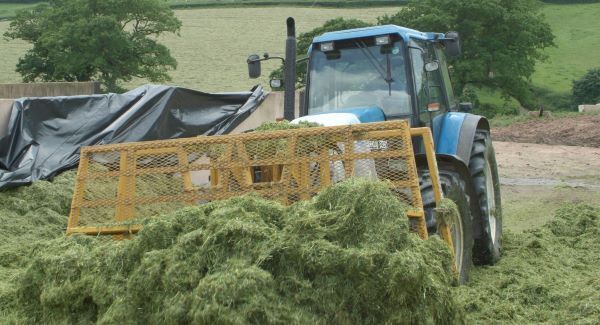
Some will consider taking a very late, bulky first cut. This will however be of very poor feed quality, resulting in huge expense to balance it correctly. Many who have reduced the volume of second cut silage in their system may consider larger second cuts this year. This will however depend on stocking rates and summer growth and weather.
I have been talking to some farmers in the last few days who are considering buying standing crops of grass for silage in May or June.
Some have been quoted crazy prices which make no economic sense.
Some have been quoted mad money for one cut, and they must fertilise it themselves. When was any of this ground reseeded last? What has weed control been like? Etc, etc.
The cost of this silage should be assessed per tonne of dry matter. For example, if a cut of bought-in silage costs you €320-340 (do the sums) per acre into the pit? A typical 10-tonne crop at 20% dry matter works out at €160-170 per tonne of dry matter.
You must then consider the quality of the grass you ensile.
Other options out there include maize silage bought into the pit at €950-1,100 per acre (depending on distance from your yard).
A typical 20-tonne crop grown under plastic at 30% dry matter, bought in, works out at €161-166 per tonne of dry matter. Any given year, the maize will have significantly more energy than purchased silage.
Poor silage will result in animals underperforming, and will incur increased balancing costs.
Other options that may represent value this year include wholecrop and beet, depending on price and availability. If you intend to buy maize, whole crop or beet later this year, you must make contact with a grower ASAP, so that you can secure the acreage or tonnage you require.
Most are now buying and selling maize silage by the tonne, with the value determined by dry matter and starch content.
Whole crop is being valued in the same way.