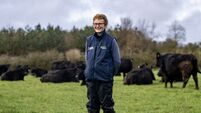
All seem to have accepted the huge value of including adequate clover in pasture swards
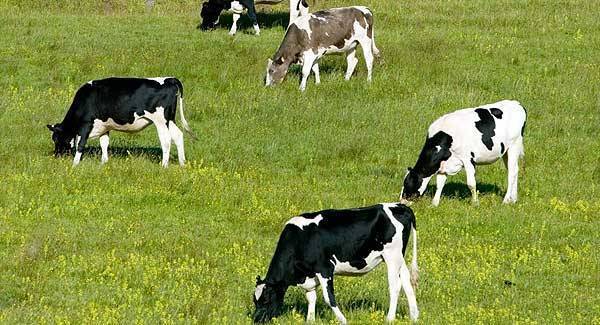
The biggest news in grassland reseeding is everyone in Teagasc, and most progressive farmers, at last seem to have accepted that including adequate clover in swards has huge financial advantages, .
Recent trials at Teagasc Moorepark and Teagasc Clonakilty Agricultural College showed that clover swards have the potential to increase profitability per cow by up to €200.
Clover swards provide up to 100 units of nitrogen per acre free from the air, and cows on these swards produce an extra 50kg of milk solids per lactation.
The clover swards also produce an extra 1.5t of dry matter per hectare in intensive grass-based dairy production systems.
There has been a traditional bias against clover in Ireland, but the latest trials proved that any perceived problems with clover can be overcome with suitable management.
Reducing nitrogen application by 100 units per acre from May onwards did not affect herbage yield of the clover swards (150 units versus 250 units).
This allows is a significant saving in fertiliser costs.
Reseeding
On average, less than 3% of potentially good grassland is reseeded annually.
It should be 10%, to bring our national grass production up to what is required for reaching the 2020 targets for dairy and beef production.
Most farmers now realise the value of reseeding, but the amount of ground reseeded any year varies as much as 50%, largely depending on the weather and the economic situation on farms. Widespread Teagasc surveys indicate that many Irish pastures are producing 50% less than their potential.
Teagasc Moorepark research indicates there is huge variation in grass dry matter production on farms.
There is up to 50% difference between farms, and 60% within farms, and the key factor is the level of perennial ryegrass within pastures.
Of course, poor soil fertility, soil type, and poor management will also significantly reduce grass production and utilisation. Over 90% of soil samples are deficient in either P, K or lime.
With pressure on farmers to increase production and efficiency, and the high price of fertilisers, and other rising costs, reseeding pastures that have a low level of perennial ryegrass has become more important than ever. Farmers cannot afford to be applying fertiliser on poor pastures that give a poor response.
New late diploid grass will be top recommended in 2018
Teagasc Oakpark researchers have has bred an excellent late diploid grass. Its expected PPI of about 135 should top the recommended list in 2019.
The Pasture Profit Index (PPI) is similar to the EBI in animal breeding.
There is a difference in PPI of over €100/ha/year between the best and the worst varieties.
Using the PPI and the Department of Agriculture’s recommended lists enable merchants and farmers to choose the best varieties for different situations.
Varieties are divided into early, intermediate and late, on the basis of heading dates.
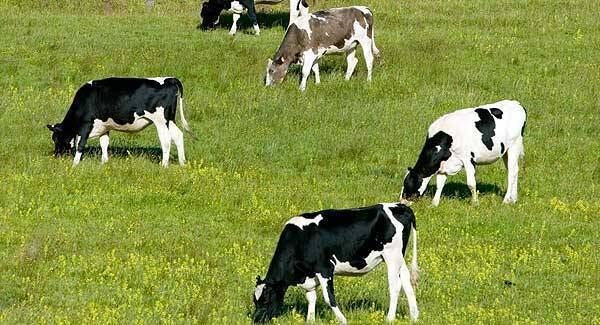
It is easier to maintain high digestibility with late varieties throughout the grazing season. In recent years, most farmers have used all late varieties in intensive grazing areas. However, where early silage may be required, it is probably best to use one early growing medium variety and two late ones.
Newer late varieties have very good spring growth, and are only classed as late because of their heading dates.
Seed mixtures
Co-ops and reputable seed merchants have good seed mixes, formulated by seed experts and Teagasc, to suit different farms, with only the top varieties included. Most merchants have at least four different mixes.
Teagasc research indicates that grazing and one-cut silage swards should include at least 1.5-2kg of clover seed per acre. Late autumn is not suitable for sowing clover rich pastures as clover seedlings are vulnerable to early frosts.
However, clover seed should be included in all August-sown reseeds.
The full list of recommended varieties is available in Teagasc offices.
The many advantages of reseeding
The advantages of reseeding poor quality pastures are as follows.
- Potential 35% increase in yields of grass and silage (depending on how bad the old pasture is, and how well the reseeding is carried out).
- Better response to fertilizers (25% better response to nitrogen fertiliser).
- 20% higher digestibility
- Better seasonal growth
- Better quality silage, by ten units of DMD (digestibility), easier to preserve.
- Big savings in concentrate feed requirements: worth 60 cent per animal per day.
- Better animal performance: adding 4.5 litres per cow per day to milk yields, adding 0.2% to the milk protein percentage; and increasing live weight gains.