Tillage farmers advised to go organic
Tillage farmers are missing out on a valuable €350 per tonne grain crop, say organic farmers.
Tillage farmers advised to go organic

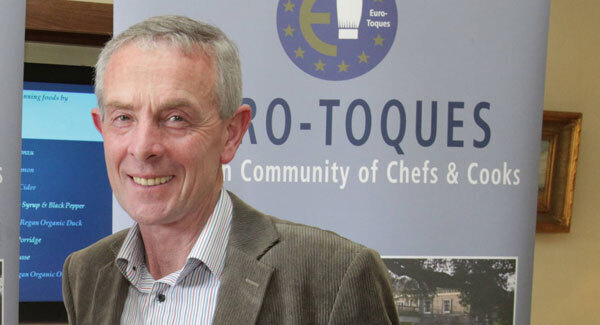
That is what Flahavan’s pay for milling oats, according to well-known organic farmer Patrick Lalor, a member of the board of management of Organic Trust, one of the Irish organic certification bodies.

He said, “It is a fantastic price. I have no doubt that it is way more profitable for a cereal grower to produce organic oats at €350 a tonne than it is to produce conventional oats for between €100 and €200 a tonne.

“I do not know why more of the big cereal operators are not starting to grow organic oats. Flahavan’s has held a public meeting to try to encourage more people to grow organic oats, but I do not know whether that approach will work.”

“After I sow the seed into the ground in the month of October, I close the gate and come back with the combine harvester the following August. I use no sprays or chemical fertilisers.”

Mr Lalor was addressing the recent Oireachtas Joint Committee on Agriculture, Food and the Marine’s debate on organic farming.

He said, “The yield is between 2.25 tonnes and 2.75 tonnes per acre, but it can be up tothree tonnes. If it is very bad, it can be as low as two tonnes, but I have never averaged that figure. I aim for an average of 2.5 tonnes per acre.”

“From an environmental point of view, it is totally clean. Even the seed sown is undressed. The totally clean seed comes from the previous year. It is a no-brainer in terms of the environment.”

Mr Lalor added: “In one way, it is very simple, and very complicated in another.

“If the soil is right, it will protect the crop. Getting the soil right is a lifetime’s work. There is no blueprint that enables it to be done over a five-year period.

“It is known in science that if one pushes a crop by using soluble nitrogen, potassium and other industrial phosphates, because one wants to get the maximum yield, one’s crop will grow faster than nature intends, and is then unable to withstand diseases.

“If the crop is grown organically, it grows at its own speed, as nature intended, and does not get the diseases. It is not that our crops get diseases, and that we have a problem with them, but that they do not get them. If one manages this right, one will not have problems with weeds.

“It sounds simple, and it is. It is down to day-to-day management, as well as management of the soil on a long-term basis.

"Long-term soil management involves looking at the biology rather than the chemistry of the soil. We look at things ordinary farmers do not even think about, such as bacteria and fungi.

“This is not about people with long hair, Aran sweaters and sandals who were associated with organic farming many years ago, but serious commercial farming.

“If one gets the soil right, one can do without all of these things.

“One year, I had a 50% failure rate, but so did every other cereal farmer. That was the winter of 2010-11, which wiped out a lot of cereal crops, but it had nothing to do with organic farming.”

“There is a need for a sustainable rotation system. My rotation is very simple altogether. It is two years oats, two years red clover, and then back to oats again.”

He said it involves using as much farmyard manure as possible, but that is the only input

x

More in this section

Farming

Newsletter

Stay ahead of the season. Sign up for insights, expert advice and stories shaping Irish agriculture.

Cookie Policy Privacy Policy Brand Safety FAQ Help Contact Us Terms and Conditions

© Examiner Echo Group Limited