Cormac MacConnell: My close encounters with the boys in blue
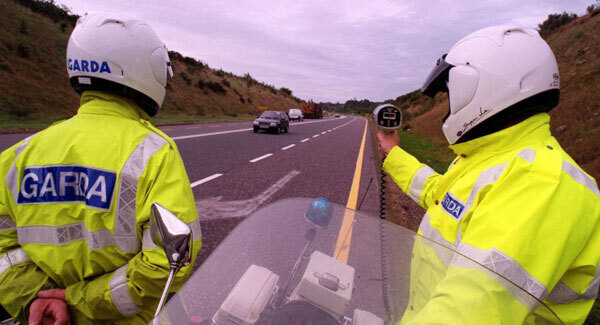
He was courteous and apologetic and, after we shared a cup of coffee, he advised me to attend the court hearing the following week and explain the truth that the summons was the first notice I had of the alleged offence.
I did follow his advice, attended the court, and the case was immediately struck out because I had not received any prior notice before the summons was served.
The young garda did not have to give me that useful advice, he called just to serve the summons, but, clearly I’m grateful to him for the advice.
His force is under heavy pressure at the moment nationally because of system shortcomings from the top downwards.
I hold no brief for the upper management echelon, which, inevitably, is probably a little politicised, but I do want to put on the record, after a half-century of living in rural Ireland under the control and supervision of An Garda Síochána, my appreciation and respect for the men and women who man the thin blue line between us and chaos.
I was born on the other side of the Border. Here the RUC was a force to be feared by the minority nationalist community of which I was a part.
I will never forget huge RUC men with revolvers at their hip coming into my primary school, ostensibly to make us aware of the road safety code but, more obviously altogether, to demonstrate the power of the State that ruled us.
Whilst they were talking about the rules of the road our young eyes were riveted upon the gleaming black butts of their revolvers. The pure truth, I will never forget.
It is a remarkable further truth that during my decades in what we always called the Free State, working as a journalist, I have only encountered two instances I’d be critical of. Both occurred in Co Cavan and, ironically both involved members of the force born and bred in Co Mayo — one a sergeant in Virginia and the other a garda.
It happened in the seventies and other men, probably with justification, were suspicious about young men with Ulster accents, beards and long hair. In both cases I was well grilled before being able to prove that I was neither a terrorist nor a criminal and had a valid reason for being upon the road I was stopped.
Elsewhere, meeting thousands of gardaí during my working life, I have always encountered courtesy and commonsense, a willingness to be helpful above and beyond the call of duty. And that again is the pure truth.
Those of you fortunate enough to have been born and raised in the Republic have no idea at all about what it was like to be born into the minority nationalist community north of the Border. The RUC did not trust us, did not like us, always suspected all of us of plotting to destroy the “Union” with Britain, and treated us all accordingly.
They were drawn almost entirely from the Unionist community and policed the minority extremely harshly all the time. Hence the revolvers in the classrooms of young children in primary schools and the very obvious Sten guns at the checkpoints on the country roads near the border.
I have no criminal record of any kind, thank God, and I am not trying to curry favour with any member of the force, but I have to state clearly here and now that this republic is extremely well served by the men and women on the beat throughout rural Ireland.
There is a major dose of commonsense involved, and an equivalent element of compassion, in the fashion in which the overwhelming majority of members of the force deal with the communities they serve.
Older gardaí, I think, who have served in the country for decades, have more commonsense and real rural intelligence than the younger men and women who, again ironically, have had more intensive training in Templemore. Would it be those younger members, I wonder, driven by a desire to reach targets, whose actions have inflated targets such as the level of breathalyser checks? I fancy this may well be the case.
There is much debate today about the decline of rural Ireland. One perhaps obscured reality relates to the closure of so many small garda stations in recent years. The communities involved in such closures lost not alone a local family or families but also the necessary injection of new blood and energy into the parish.
The policemen and their families not alone vitally supported the roll books of the local schools,often helping to keep them open, but also added considerable energy to the community generally at every level.
The “Blow ins” in blue, apart from their official duties, also reinforced local organisations and agencies across the social scale from the GAA parish team to the quiet activities of bodies such as Saint Vincent de Paul.
Often, in many parishes, the local gardaí, when off-duty, were the genuine first responders whose actions ensured that other first responders were never needed at that doorstep. The continuing truth yet again.
When I was driving home in my youth on the other side of the border I was always apprehensive, to put it mildly, when stopped by an RUC patrol. Anything could happen after that.
I have never had that apprehension down here, not ever, whatever the circumstances, and, really, that says it all.
Commissioner Nóirín O’Sullivan walks a far different beat to the man or woman in blue who will be checking out you and I tonight.