Brazil loses second biggest buyer in meat scandal
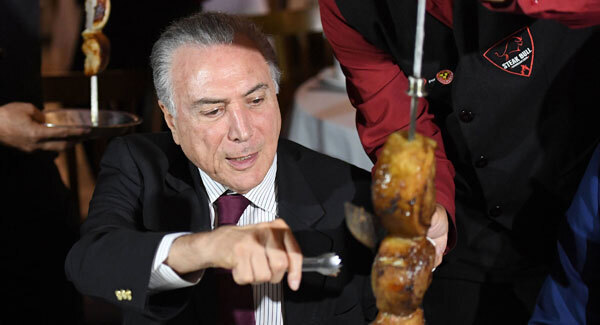
In Brazil, police have accused inspectors of taking bribes to allow sales of rotten and salmonella-tainted meats.
Brazil is the top supplier of beef to China, with 31% of its imports in the first half of last year.
Hong Kong, the second biggest buyer of Brazilian meat last year, has banned the imports, following the lead of Japan, Canada, Mexico and Switzerland.
The EU called Brazilian representatives to an emergency meeting this week to explain the scandal involving rotten meat and the country’s two largest exporters, JBS and BRF.
Last weekend, Brazilian Agriculture Minister Blairo Maggi announced the suspension of exports from 21 meat processing units being investigated.
Operation Weak Flesh was launched in six Brazilian states last Friday, after a two-year investigation by federal police. Companies are accused of using chemicals and acid to disguise rotten meat.
Among the investigated units are the world’s number one poultry and beef exporter firms, BRF and JBS.
More meat export bans are feared in Brazil, where the price of shares in JBS has slumped 20% since Friday, shares in their rival Marfrig fell 7.9%, and the BRF share price fell 18.2%.
Minerva shares fell 14.9%.
Last year, Brazil was the second largest global exporter of bovine meat, at nearly 1.1 million tonnes, worth an estimated $12 billion. Exports are expected to expand further as Brazilian production systems improve.
The EU is not currently a major export destination for Brazil, due to quota restrictions, high tariffs on out-of-quota shipments, and fewer beef producers than previously being licenced to supply the EU.
But Brazil is still the primary supplier of imported chilled and frozen beef, with about one third of the EU market.
Italy and Spain are the primary destinations.
Before EU concerns were raised about cattle traceability and foot and mouth disease controls, in December 2007 (when Ireland’s IFA led the opposition to Brazilian beef imports), Brazil was the second largest supplier of beef to the UK.
But in 2016, it had slipped to eighth position, with only a 1% market share.
Beef is a central item in the current negotiations by South American countries with the EU on a free-trade agreement, but progress has been very slow in the talks.