Macra: CAP talks big issue: James Healy
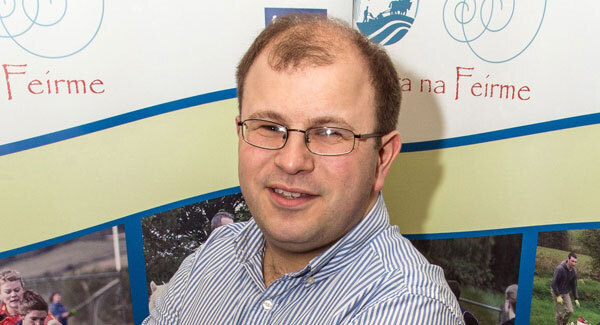
He is currently an Associate Member on the Macra na Feirme National Council and has held numerous roles at club, regional and national level including Munster VP from 2013 to 2015.
From a farming background, he works as a production supervisor with an electronics company.
His club is Donoughmore Macra.
“When I was Munster VP, I put a huge amount of time into travelling around to counties and listening to members, and taking that feedback to the national organisation, and I think that I want to bring the same sort of ethos to the presidency”
Competitions, personal development, agriculture.
From a personal point of view, it’s very hard to pick a particular event. My highlights in Macra tend to be ones where it’s being part of a team, the Capers final is a very good memory for me, but I suppose my greatest highlight in Macra is definitely Donoughmore Macra winning Club of the Year.
They won it in 2015 and 2016, and I suppose when you have been there since the start, it means quite a lot to see the club where you have spent a huge part of your life grow to the point of winning Club of the Year.
I have spent a good period of time at national level in the organisation. I have been national competitions chair, I was Munster vice president, and at various times over the last couple of years I have considered running [for president] but, for different reasons, it wasn’t the time. It was something I always wanted to do. I also think that I can add a lot to the organisation.
I have a huge amount to give back, I have a huge amount of experience and it is not just Macra experience, but life experience that I can give to the organisation.
When I was Munster VP, I put a huge amount of time into travelling around to counties and listening to members and taking that feedback to the national organisation, and I think that I want to bring the same sort of ethos to the presidency, because I think it’s what the organisation needs right now, and I think that I am the best person to do that.
I have participated in a lot of competitions. I have been a very active Macra member, which all plays into the presidency but I am also a very good listener. Sometimes, you just need to listen to what the members are saying, you learn a lot more with your ears.
I also have great patience and I’m very outgoing, and that lends itself to the position of president, because the president is the president for its members, and they have to feel like they can approach you. They feel like they can talk to you, but at the same time, I am quite straight with people if there is a problem, I will talk it out with them.
Firstly, from an external point of view, obviously we have had our CAP meetings recently, and the next president is going to spend a lot of time lobbying.
We [Macra] are going to put together our submission for CAP2020 shortly, and hopefully we will be presenting that to the EU Commissioner and our own Minister for Agriculture, so the CAP negotiations are going to take up a huge amount of time for the next president.
Internally, some of the issues that have come up during the strategic planning meetings are transparency and communications.
I suppose people look at issues with other charities, and we in Macra need to be whiter than white, everything we do needs to be transparent. We need to show members that they are getting value for money.
The big one, and I have mentioned it earlier, is the CAP negotiation. Macra has achieved things in the previous negotiations, where the young farmer top-up was a Macra idea.
We took it through our president in CEJA, the European young farmers’ organisation. We got CEJA to take it on as their policy, and we managed to get it into the CAP through that process.
At the moment, we are putting that CAP submission together, we will take it through the same route, and hopefully we can achieve two or three key things for young farmers. We have to look at the feedback from the CAP2020 consultations to see what members want.
We need to look at the data [from these consultations] and let it be a data-driven decision, to see the most important things young farmers think they need.
We had the announcement of the National Reserve, it looks like they aren’t covered, again. We’re just going to keep fighting, the older young farmer is an issue, it has been an issue for a while, we will just have to keep fighting for them to be eligible for some part of the National Reserve.
The way I look at it, every club is different and every county is different, and I think it’s going to be very hard to have a blanket strategy that you can roll out across the whole country, where one size is going to fit all, that just isn’t a runner.
A drive for membership is specific to each club, because the setting of each club is different and each club has its own different personality, and I think it’s about the training officer and the county officers getting into the club and talking with the officers in the club, and making lists of people that can join. It’s about sitting down and thinking how you can strategically bring members in.
Obviously, from a national point of view, maybe there are things we can do from an advertising point of view, but from my own experience, people come to Macra through word of mouth, through a mutual friend, through connections, there’s very few people who ring up, be it to the office or to a training officer and say I want to join Macra, can you tell me where to go, a lot of it is that personal connection.
You have to ask the question, will you join Macra?
The most unusual thing is when you try to explain Macra to somebody that isn’t in Macra. I think, compared to another organisation, when you tell people about them [other organisations] and their activities, it’s very easy to explain or give them an impression of what they do, but from my own experience with most people, when you try and tell them what Macra is, it’s very difficult to encapsulate everything that we do, and it’s only by bringing them to Macra events and showing them that you can give them a true sense of what Macra does.
Bales
I nearly would, although it’s a David Brown that we have at home.
Milking cows, there’s something therapeutic about it. It gives you time to think. When I am filling in on my uncle’s farm, it gives you plenty time to think and run things over in your head.