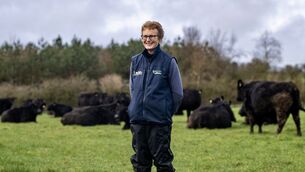
Oliver Moore: Local and regional Brexit impacts
“The organic food industry in Western Europe and the US has been experiencing a prolonged period of high single-digit to low double-digit sales growth — and, on the back of ongoing health, food safety, and environmental and animal welfare concerns by consumers — Rabobank expects this trend to continue.”
The Rabobank October 2016 report, authored by senior consumer foods analyst John David Roeg, predicts Western Europe sales to grow by 6.7% and the US by an even more impressive 7.6%.
This is “roughly three times faster than overall food consumption growth”. The optimistic scenario points to even higher growth of 9.2% in Western Europe.
Roeg states: “Food producers should increase their focus on organic, through new products and brands, or through the reformulation of existing products to help grow their top lines. This will also help them to position themselves as responsible businesses.”
Indeed the main barrier to growth is that “the supply chain is currently not sufficiently established”.
This statement by Rabobank last week mirrors positive growth figures issued by Kantar for Ireland and for the UK markets.
The methodology for counting performance in Ireland queried by many in the organic sector — while the methods are at least consistent, they ignore direct sales and Irish company performance overseas.
Both are key to understanding how the sector is faring in Ireland. These are glaring omissions, and have been for years.
Nevertheless these figures state that the Irish market grew by 6% last year and a whopping 23.7% this year. The domestic organic grocery market is now valued at €142m. This is as good as it’s ever been, and growth shows no sign of slowing.
Beef is central to Ireland’s organic sector. Led by the UK, Ireland has also strong markets in Scandinavia, France, Holland and Belgium, Ireland’s main organic beef markets. All these regions are experiencing strong growth in organics.
Nevertheless there are local and regional challenges. With exports to the UK so crucial, the rapid drop in sterling has inevitably impacted the sector. Irish beef is — suddenly — more expensive for UK consumers.
Perhaps optimistically, Gavin Lynch of the Organic Trust stated soon after the Brexit referendum: “Even in the beef sector, it is mainly high-value cuts being sold into the UK at the minute and this is the part of the animal that is easiest sold.
In the event of difficult trading conditions between the UK and Ireland persisting, finding an alternative outlet for this beef shouldn’t prove too difficult.
Speaking to John Purcell of Good Herdsmen, the outlook is still quite positive, indeed Good Herdsmen are currently investing around €1.3m in new facilities to expand their operations which is a huge vote of confidence in our organic beef sector.”
John Purcell himself was more sanguine at a recent organic farm walk in Offaly, where he said that about 40% of sales have been impacted.
Despite forward buying, and some strong growth in Irish and other EU markets, Irish organic cattle prices have fallen somewhat. Prices paid have dropped to about €4.50-€4.55 per kg over the last two weeks.
While this is still a full €1 per kg higher than the price of conventional cattle it is concerning for Irish organic cattle farmers nonetheless (Organic farmers typically have a lower stocking rate).
How will this all play out with the fact that there has been huge growth in the number of cattle farmers joining the organic farming scheme?
What steps are being put in place to manage this? Is the lack of competition in the milk and meat processing sectors problematic?
And what about the other sectors in organics — what plans are in place to develop pork, poultry, horticulture and tillage?
These and other very important questions on State plans will be put to Andrew Doyle, the Minister of State who has responsibility for the organic sector in an exclusive series, over the next two weeks in this column.