Oliver Moore: Sculptor carves big niche in fine cheese
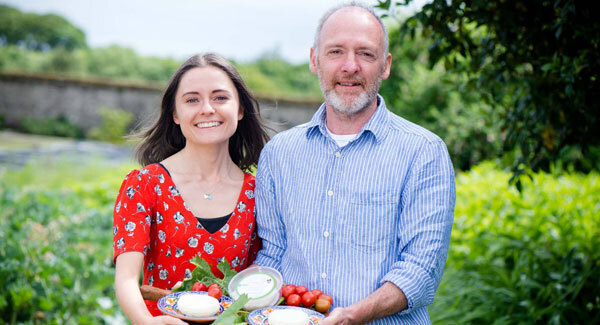
“I was a full-time sculptor,” says James.
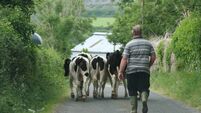
“After the crash I needed an alternative income. We had a herd of suckler moileys [moiled Irish cattle] which we kept more for cultural reasons than economic, on my wife’s family farm in Roscommon.
“I started milking some of the sucklers. They produced great butter, but what do you do with the rest of the milk? This was the origins of the fresh cheese. It was also very difficult for us to get our organic milk collected, and we didn’t have a readymade bottled milk market either.
“We’ve only been working a short while on the cheese, but our aim is to produce two tonnes a year.
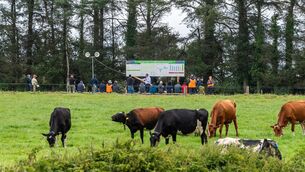
“We have 10 cows on 35 acres on the Galway/Mayo/ Roscommon borders. Because the emphasis was on saving the breed rather than selecting for beef or milk yield is very erratic. We get 12 to 35 litres per animal with a 6-8 month lactation.”
The land is very challenging down here, and it’s getting wetter and wetter. The area is known as the Cloontias, with small islands of alkaline hillocks surrounded by bogs.
As it happens, it’s also one of only two areas of impervious old red sandstone in Ireland. This makes farming challenging but we have an interesting terroir.
There are plenty of organic farmers around here but we are well scattered. Only for the Leitrim Organic Farmers Co-op — they have held up the price of beef and lamb.
Until that was established you were taking a hiding on price all the time. So they have been a great lift to farmers in the area. It was through the co-op we got a grant to start off the moileys.
It’s difficult for small organic farms. We can be isolated, for sourcing meal for example it’s a 20-mile drive. If you wanted to grow your own cereal it would be on a very small scale.
With work and travel I was looking for an easy managed animal — easy calving, easily fed. There are also then cultural reasons. They are a part of our culture.
It’s as worthwhile saving them, along with the language, music and so on. Moile is mixed breed, originally diary, they were the smallholders’ cow bred for butterfat until the early 1900s, when Shorthorns came in.
Small farms like this wouldn’t finish beef. Typically to finish a moiled steer takes three years. If you add up one and the other there is no comparison — dairy is better money. The hours are longer, the work is harder but the returns are better, even just for milk.
The style is similar to the robiola, it’s a style in northern Italy. After we milk, while it’s warm we add cheese cultures, then it’s cultured overnight until next day.
The lactic acid builds, it’s hand- ladled into mounds, turned several times and dried.
The pH is kept below 4.5 as listeria won’t survive below that. We did cheese courses with Hans Wieland in the Organic Centre and another then with Helen Finnegan in Kilkenny.
The soft raw cheese is doing very well with restaurants and is used by chefs like Philippe Farneau, head chef in Ashford Castle, Jess Murphy in Kai Galway and Stephen Lenehan in Belleek Castle and also the Oarsman in Carrick on Shannon.
We’ll be starting a mature cheese for the shops that has a longer shelf life.