Advice for farmers: A new look at the fertiliser value of cattle slurry
The reduction in K content is not surprising, given the decline in K fertiliser inputs since the 1990s.
But slurry is still a valuable source of nitrogen (N), phosphorus (P) and potassium (K), farmers were told at Beef 2016.
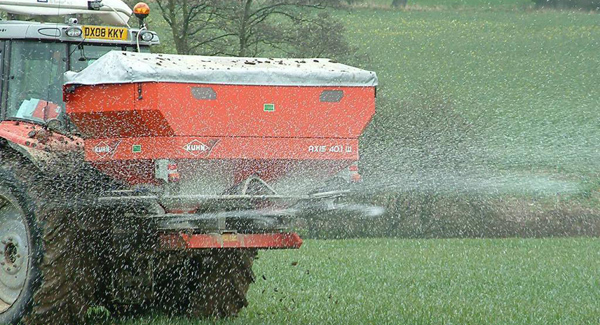
One thousand gallons applied by splashplate in the spring has an available N-P-K content equivalent to a 50 kg bag of 6-5-30.
Applications should be targeted to areas of the farm with large P & K demands, based on soil test results.
To maximise nitrogen from slurry, it should be applied in the springtime, on cool, overcast days.
With splashplate spreading, slurry nitrogen value is about three units of N (worth about €1.50) per 1,000 gallons better in the spring than the summer.
And using a band spreader or trailing shoe adds another three units of N per 1,000 gallons, compared to splashplate.
However, the nutrient content of cattle slurry varies with animal type and diet, and especially with the dilution effect of water.
Knowing the nutrient content helps to ensure crops get planned levels of N, P and K. Lab analysis of slurry is rarely done, but estimating dry matter, using a slurry hydrometer, is recommended.
N uptake is better from watery slurry because it infiltrates faster into the soil.
While dilution increases N efficiency, it reduces the P and K content of the slurry.
Many farmers have seen the benefits of diluting cattle slurry with pig slurry rather than water.
Before importing pig slurry, check your farm fertiliser plan, to determine how much can be imported onto the whole farm.
Importing pig slurry is not permitted on farms with a Nitrates Derogation.
Fields around the farmyard tend to have higher levels of P and K, due to more regular applications of manures.
But silage fields are often the furthest fields from the yard, and they tend to have both low soil fertility levels, and the largest demand for P and K.