Brexit is the main topic for debate as British farmers get ready for life without CAP supports
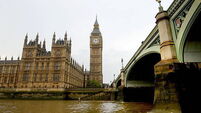
The UK has now become the divided Kingdom with Northern Ireland and Scotland voting to stay in the EU while England and Wales voted to leave.
In England the youth, middle class, London and the prosperous south east voted to remain while the majority of farmers and the working class voted otherwise.
The political establishment has somewhat imploded in England and Wales, so there is a distinct lack of political leadership right now.
Clearly there was no plan B and the leave campaign did not expect to win so their Brexit plans were somewhat hazy.
Despite promises made by the leave campaign, some of the farmers who voted to leave the EU now wonder who they can believe.
After all neither the Labour party or the Conservatives have a great record in looking after farmers in Britain.
Cheap food for the consumers, cheap holidays for the working class and keeping the green lobby happy are the vote getters.
For example not long after fighting a bloody and expensive war in the Falklands the British army was back buying their beef from Argentina.
British dairy farmers are feeling the pinch from low milk prices and many are losing money.
So there is a greater interest in once a day milking, lower milk yields, producing more milk from forage or any technology which can improve profitability by reducing agri inputs, improve herd health and minimise labour costs.
There is a huge variation in milk prices and about 57 contracts currently in operation in Britain. These could be with supermarket groups, for liquid milk, cheese manufacturing etc.
Dairy farmers in remote regions such as Cornwall or Scotland find that their options are quite limited unlike those who produce milk in the midlands.
Indeed the range between the average prices paid for the top 10% of contracts and the lowest increased from 11.7 pence/litre to 13.9 pence/litre between March 2015 and March 2016.
In fact the lowest price for milk was 15.76 pence/litre and the best was 31.94. pence/litre.
Indeed the First Milk group have five different regional milk prices so Irish dairy farmers should appreciate their Coops and Plc’s.
So to compensate for low milk prices those unfortunate farmers responded by increasing their average herd size by 32 cows.
Also according to the Kingshay dairy costings focus report for 2016 the top 10 % ranked by forage used saved 2pence/litre or £32,000 on purchased feed for an average sized herd.
In the short term the immediate impact of the Brexit vote is a much weaker sterling which has been a significant benefit to British farmers.
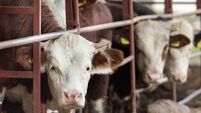
Cattle producers now find their meat more competitive on the home market while British lamb is more competitive on the important French markets.
In Britain the price of lamb recently was almost £2 per kg compared to just over £1.50 the previous year.
So livestock farmers are benefiting from better prices as are arable farmers and milk producers. Farmers will also be receiving higher EU subsidies because of a weaker sterling.
Land and rental prices have not been impacted although those signing tenancyagreements are advised to have a clause inserted to protect them if Brexit has a negative impact on their farm incomes in the longer term.
Nothing much will happen for at least two years to farm subsidies and in the meantime buying land in Britain is a more attractive option for foreigners.
The weaker sterling will also benefit agri and other tourism, farm machinery exports from Britain such as Massey Ferguson tractors and of course firms based in Northern Ireland such as Teemore Engineering who had a big stand at the Livestock Event. Irish companies such as Hi Spec and Keenan will have to increase their prices.
However these firms dominate the market for mixer wagons and their main competitors are other EU based firm so they will not be at any competitive disadvantage.
The demand for mixer wagons, concrete slats and cow mats is determined to some extent by farm incomes so if the British farmer is better off then they can afford to buy more Irish products.
In any event the trend in Britain is inexorably towards bigger herds so those farmers need to buy bigger machines, build bigger cubicle houses, install bigger concrete water troughs etc. which means more business for Irish companies north and sound.
For example to save time and money on straw bedding more farmers are switching to concrete slats and cow mats and the market for these is dominated by Irish companies.
Apparently most mats are sold to suckler herds and Irish firms have also built up a nice business in Holland and in the USA. There is a heavy environmental levy in Britain on concrete manufacturing so this gives Irish firms a competitive advantage. In total the UK is importing £87m of cement annually to supplement domestic production.
As regards milk supplies these fell by 9.1% during the last two weeks of June and this was 4.3% below a three year average.
This had a positive impact on milk prices as the actual milk price equivalent increased by 12%.
This was due to a 16% increase in butter prices, a 4% increase in skim milk powder, a 19% increase in whey butter and a 10% increase in whey powder.
The actual milk for cheese equivalent also increased by 14% while bulk cream prices were up by 28%. So no wonder Dairy Crest has reversed the milk price cut originally announced for July.
However one group of farmers in Britain who are worried are those in the Horticulture sector where 35,000 migrants and seasonal workers are employed, 65 % of whom come from the EU and Eastern Europe.
Will these guys be asked to leave and can they be replaced by a student visa scheme which could import replacement workers from India, Africa etc. According to a survey by the NFU 29% of growers struggled for sufficient workers last year.
Four polls commissioned by the Farmers’ Weekly before the referendum confirmed that the majority of farmers would vote to leave the EU.
For many the EU had come to represent a bureaucracy gone mad to the point where farmers are required to measure fields to four decimal points before claiming a subsidy.
Add in arrogance, incompetence, a lack of support for hard pressed producers and a negative attitude to what they perceive as modern farming their vote was not surprising.
The big question in Britain and Norther Ireland is what will replace the CAP which currently accounts for 55% of their farm income.
DEFRA Minister George Eustice (Equivalent of our Minister for Agriculture) said options already being discussed included market measures and a renewed focus on agri-environment schemes.
So farmers in Britain can most probably expect less emphasis on direct payments and a move towards other forms of farm support in a post-Brexit UK agricultural policy
So what is the bigger picture and why did a majority of farmers vote to leave the EU. In 2015 the UK government paid £13 billion to the EU budget, and EU spending on the UK was £4.5 billion. So the UK’s ‘net contribution’ was estimated at about £8.5 billion.
UK imports 600,000 cars a year from German, plus thousands more from France, Italy, Spain and the Czech Republic; so, as one farmer said to me, if the EU does not give Britain a good deal the car companies will put pressure on Angela Merckel et al.
In addition the proportion of the UK’s goods exported to the EU has been shrinking since the early 2000s, when it accounted for around two thirds of total UK goods exports.
Among its 53 members the Commonwealth contains at least seven of the fastest-growing global countries with ballooning new markets collectively exporting more than £1.5 trillion of goods and services each year.
Some of the biggest leaps in UK exports — of both goods and services in the last two years have been to Commonwealth countries — via a 33.5 per cent rise in exports to India, 31.2 per cent to South Africa, 30 per cent to Australia, 18.3 per cent to Canada.
As the world’s sixth biggest trader, Britain exports £54 billion to the Commonwealth - less than a quarter of its European trade but growing at over 10% a year.
So in theory at least Britain can manage without the European Union and can afford to replace EU subsidies with the savings from Brexit.
In the short term, however, a lack of business confidence could seriously damage the UK economy while EU exit arrangements and new trade agreements are being negotiated.