Technology vital for food and farming to compete
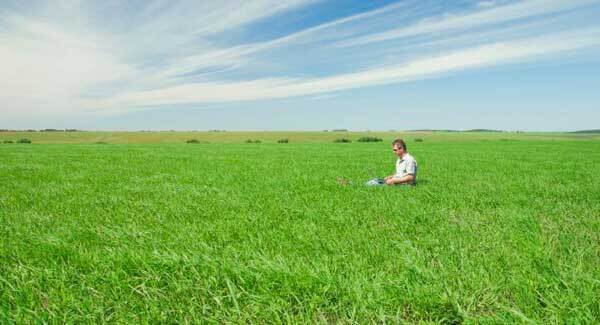
It’s 2016. A farmer from Sub-Saharan Africa opens his mobile phone, and receives information of value to him in managing his farming enterprise.
The internet is only about 20 years old. The mobile phone likewise. It is extraordinary how these technologies have transformed everyone’s lives.
Let’s go forward another 20 years.
What technologies will be available, and how will they impact on farming and food? This was the theme of a conference organised by Teagasc last week, to coincide with the launch of its report, Teagasc Technology Foresight, 2035.
The predominant message is positive — almost limitless opportunities, created by the declining cost and increasing power of the internet, and its associated technologies.
Even where the new opportunities are diverse areas such as animal breeding, or human and gut nutrition, the data collection and management information (back to our African farmer) are intimately connected and made possible by current (never mind future) developments.
One political point here, relevant to our recent election and negotiations on a new government.
Rural deputies from all parties are apparently agreed that a key infrastructural need is for rural broadband. Many current hi-tech farming schemes cannot be delivered in some areas of Ireland because of inadequate broadband.
Farmers are thus not competitive compared to the Sub-Saharan farmer with his mobile phone.
This has to change if the Teagasc vision of creating a second focus to our competitiveness in farming and food, based on technology, is to be delivered. There is a need to sell this priority to a wider society, including the Dublin-based elite.
There was another conference in Dublin a few days earlier, grandly dubbed the National Infrastructure Summit.
It too had a list of national and international speakers who discussed, among other things, road transport, a Dublin Metro, water services for the Dublin area, and port development; nary a word about rural broadband (details on infrastructuresummit.ie).
It’s not as if this was a newly identified idea. It was the primary recommendation of the CEDRA report, led by Pat Spillane (why isn’t he one of our new TDs?) and published two years ago.
What are the key technologies which Teagasc forecast will be critical in maintaining or creating a competitive food and farming industry in the future?
Some are not surprising. The advances in genomics, which are leading to much faster breeding of improved animals and plants, have resulted in an ambitious programme of breed improvement in the dairy herd, through a scheme sponsored by the Irish Cattle Breeding Federation.
Further improvements in this area are expected, as the costs of DNA analysis drop.
Genomics is also the key to the six-year, €300m beef data and genomics programme, to address weaknesses in the maternal genetics of the suckler herd, reduce the greenhouse gas intensity of Ireland’s beef production, and improve suckler farm viability.
Nor is it a surprising to see advances in digital technologies figuring in competitive food and farming. Large scale automation of data collection through drones, farm machinery, and robotic systems are expected.
These will reduce labour expenditure on farms and enable more sophisticated and quicker decision making.
The most striking idea (to me), in relation to food technology, is the concept of extending 3D printing to the food sector.
A summary of developments to 2014 may be found in an article on Bloomberg.com called “A guide to all the food that’s fit to 3D print”.
Chocolate, pizza, ravioli, and chickpea nuggets are among the products cited in the article.
Probably the most interesting of the major technologies discussed at the conference and in the Teagasc Foresight report concerned what they call microbiota — the wildlife that survive and prosper within the human and animal guts, and also in the soil.
It is increasingly realised that human nutrition focused solely on the human is inadequate, and that as much attention should be focused on nourishing these critters in our gut.
It is envisaged that new food products designed to nourish the gut flora can play a major role (replacing expensive drugs) in management of allergies, intolerances, obesity and diabetes.
Similar research could lead to products to improve feed conversion rates in livestock and grassland productivity (there’s another load of microbes in the soil, whose nutrition could be improved).
Fortunately for this area of technology, Ireland is already a world leader in research (through the Alimentary Pharmabiotic Centre Microbiome Institute at UCC, with collaborators in Teagasc Moorepark and CIT). And one of the leading multinational companies in the nutritional field is Glanbia.
There will be more dramatic changes in the next 20 years than in the last 50. These changes will be disruptive for government, business, and citizens.
Startup costs for new technology companies have fallen from $5m in 2000 to $5,000 (€4,500) today, levelling the global playing field.
But will farmers implement and benefit from the new technologies?
John O’Sullivan, chairman of the Irish Cattle Breeding Federation and a dairy farmer at Whitechurch, Co Cork, has no doubts.
He says farmers will quickly size up the costs and benefits to them, as evidenced by their involvement since 2009 in the breeding programmes organised by the federation.
“They also understood the value of tissue sampling taken from calves in the successful programme to eliminate BVD,” he said, adding that the culture of taking tissue samples is now embedded, and should be exploited in further tech developments.
Dairymaster’s Edmond Harty agreed: “If it is profitable, enjoyable, or sustainable, farmers would implement it.”
There is one aspect of technology which got little attention amid the overall optimism last week.
Ever since the start of the Industrial Revolution, naysayers have been predicting that new technologies would lead to massive job losses and a growing army of unemployed.
Job losses have occurred, and many jobs involving physical labour have been eliminated and replaced by others involving use of higher human skills.
But the predicted unemployment apocalypse has never arrived. And we all benefit in immeasurably higher living standards than earlier generations.
One further pen-picture from the conference: There is a factory in Japan where robots will produce 30,000 heads of perfectly formed lettuce a day next year, with 98% recycling of the water used to grow them.
Seed planting will still be done by people, but the rest of the process, including harvesting, will be done by industrial robots. Urban farming, a type of precision farming, but without farmers.
In our society, there is little long-term thinking.
Teagasc is to be congratulated on efforts to assess the technology developments and challenges 20 years hence. Like weather and economic forecasts, many of the predictions will be wrong, but the effort is surely worthwhile.
It has been suggested that the previous technological forecasting exercise published in 2008 had a considerable influence in the generation of the Food Harvest programme.
This report deserves a similar response from policymakers.