Farm spray regulations will bring added costs for 2016
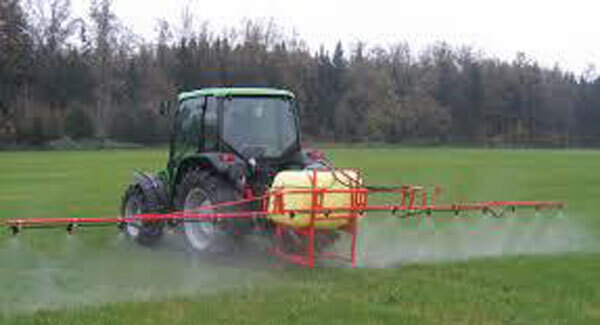
Many farmers will need to undertake training in order to apply farm sprays, and farmers who store chemicals on their farms will need to ensure their chemical storage facilities are up to spec for 2016.
Farm spray regulations will bring added costs for 2016

The regulations on the use of plant protection products are covered by Statutory Management Requirements, meaning that Cross Compliance penalties can be imposed in the case of deficiencies.

The regulations are set to extend further over the coming year, with sprayers over three metres requiring testing and approval before November 26, 2016.


At farm level, the costs of complying with this new legislation are significant, with bunded storage required on all farms where pesticides are stored, in addition to training, protective equipment and sprayer testing and upgrade costs for those who apply sprays.

New regulations came into effect from November 26, 2015, meaning that only registered professional users can apply professional use pesticides.

The term pesticide is widely defined and includes plant protection products (PPPs) such as insecticides, herbicides and fungicides.

Typical grassland farmers use relatively small quantities of spray, usually herbicides to control common weeds such as docks, nettles, briars, and rushes.

The regulations are wide-ranging and include professional users such as farmers, hobby farmers, council workers, green keepers, landscapers, operators, technicians, employees and self- employed people, both in the farming, horticulture, forestry, landscaping, garden maintenance and other sectors.

Farmers applying sprays to burn off grass fields for reseeding and to control weeds are governed by the regulations, regardless of the quantities used.

Individuals, including farmers who are not registered as a professional user, can continue to buy pesticides for professional use, but these pesticides must be applied by a registered professional user.

Where a farmer does not register as a professional user, they are still required to maintain records of the registered professional user who applied the pesticides, as well as records of stock purchase, stock usage and stock disposal.

As such, all movements onto the farm, use of spray chemicals and their disposal must be documented, and a relevant paper trail kept in place, identifying the products by name and PCS (Pesticide Control Service) number, where applied as identified by LPIS (Land Parcel Identification System number, most commonly known to farmers in identifying plots for single farm payment purposes), the crop treated, the rate applied, the date applied, the reason and or rationale for application, and the professional user who applied the product.

Importantly, the regulations on storage and records apply to all farmers, regardless of whether they have completed a training course or registered as a professional user.

An analysis of the Cross Compliance pesticide inspection checklist issued by the Department of Agriculture suggests the following factors are assessed in a farm audit:

1)

Are powders stored separately from, or above, liquids.

2)

Are storage facilities used dedicated to storage of chemicals?

3)

Are the storage facilities enclosed, secure and constructed such that leakages and spillages are retained within the store (for example, by bunding, or a floor sloped inwards).

4)

Is a warning sign displayed at the entrance to the store?

5)

Are plant protection and biocidal products stored in their original containers, and/or in good condition and/or with labels attached?

6)

Are scales (and a check-weight) and graduated measures (such as jugs) available, and designated solely for weighing / measuring plant protection and biocidal products?

7)

Are facilities for soaking up small spillages or leakages available (for example, a . bucket of sand or peat)?

8)

Are protective clothing and equipment available and properly maintained?

9)

Are required records of purchases, acquisitions, use and disposal (or return) of plant protection and biocidal products available?

10)

Has the application equipment used been calibrated within the last 12 months?

More in this section

Farming

Newsletter

Stay ahead of the season. Sign up for insights, expert advice and stories shaping Irish agriculture.

Cookie Policy Privacy Policy Brand Safety FAQ Help Contact Us Terms and Conditions

© Examiner Echo Group Limited