Take maximum advantage of the bull hormonal effect
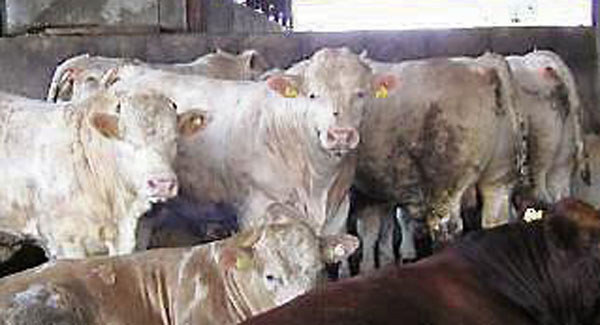
The price being paid is significantly improved compared to this time last year, and finishing these cattle efficiently is the best way of making a reasonable return.
But the weather has been variable for all livestock lately. Forward bulls have not been gaining as much weight as they should be, because they can’t consume enough dry matter from grass alone.
If you want your cattle to finish at target weight, target age and target grade, then they must gain substantial weight every day of their lives. Setbacks in thrive should be avoided at all costs.
You must take maximum advantage of the hormonal effect of young bulls to optimise profit, through high feed conversion efficiency.
With livestock producers finding grassland hard to manage these days, it is likely that for most, the option of feeding bulls meal at grass is a difficult one to implement.
Is it possible to keep top quality grass in front of bulls while feeding them concentrates easily?
Correct feeding facilities must be available, to avoid injury to both man and bull.
Sturdy troughs are needed. If using ad-lib feeders, ensure they are bird-proof.
The easiest option may in fact be to bring them inside to finish.
Is it the best option to hold on to bulls?
How much will they cost to feed? How much are they currently worth? Will they leave a margin?
The answers depend on price, thrive and weight.
Do you have an outlet for them once finished?
Once you have bulls housed, are they grown well enough to start finishing?
What is your target market? Are there upper weight or age limits?
Do they need to be slaughtered under 16 or 18 months?
Are your stock capable of achieving market targets?
Are your facilities suitable for the feeding programme you have in mind?
Do you have a straw lie-back from slats? Do you have mats on slats?
What feeds are available to you, and what will they cost?
What is the quality of your forage like?
It is critical that bulls don’t commence finishing until they have been grown correctly.
If they are not grown properly, they may begin a growth spurt during the finishing period, resulting in poor conformation and kill out percentage.
All of the above factors need to be considered in the context of what type of bull you have on your farm.
Continental types have different maturity characteristics to dairy-bred bulls.
In fact, in the final finishing phase, a larger percentage of thrive in continental bulls will be converted to actual carcass sold at slaughter.
It may be obvious. But do your cattle have enough space in the shed to achieve optimum performance.
Can they all lie down, and can they get to their feed without having to walk all over their pen mates.
Make sure ventilation is adequate.
It has consistently been seen that increasing the daily weight gain in the final months of finish will increase the conformation of the animal, and the lean meat yield of the carcase.
It is possible to move a proportion of O plus animals to R, and from R to U minus.
Daily gain will depend very much on breed, age, feed quality, management and environment. Expect in excess of 1.3kg per day under ideal conditions for most bulls, with many able to achieve 2kg plus for a period.
When setting up a diet to achieve target weights in bulls, ensure the total diet has a high energy density, in excess of 12 ME, and approximately 13% crude protein per kg of dry matter.
Exact specifications are weight and breed dependent.
Ensure that the ration contains sufficient fibre to maintain rumen function, and that there is clean fresh feed in front of the bulls for 22 to 23 hours per day.
Ideally, fresh feed should be provided every day, to encourage intakes.
Most mills sell a bull beef ration. The best concentrates for finishing bulls must include high levels of cereals in the form of barley, wheat and maize meal.
Digestible fibre sources such as oats, soya hulls and beet pulp are also important, to maintain rumen function in these intensively fed animals.
Protein, while not required in large amounts for finishing bulls, is required to encourage intakes and balance the energy provided for optimum weight gain.
Avoid, where possible, having filler ingredients high up the label.
Ask your feed supplier for the UFL or ME value of the concentrate you are considering for your bulls.
A good quality mineral spec is also important.
Many finishers may introduce straight maize meal to their current concentrate as a means of achieving the final cover on bulls, over the last 30-40 days. Many are now feeding alkaline treated cereals as all or part of the concentrates, to complement forages, or in ad-lib systems.
This system ensures good rumen health throughout the finishing period.
Ad-lib feeding of concentrates may be a more economical option for bull finishers, if only poor silages are available.
Many get confused with the term ad-lib.
For me, it is simple, the cattle must have access to meal 24/7.
They must also have access to good quality clean straw at all times.
Ad lib concentrates must be formulated differently to those fed at moderate rates.
Water quality is also a critical element to get right when you step up feeding for bulls.