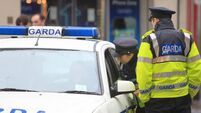
Look after our friends in the thin blue line

It is triggered by the truly tragic death above in Donegal earlier this month of a young Garda sergeant, totally innocent of any wrongdoing in a matter being investigated by Garda authorities, who cracked under the strain of his ordeal, and took his own life in Ballyshannon Garda Station.
It is poignant that he would still be alive today if he had received a phone call from his investigators, telling him no evidence had been found against him.
In these straitened times in rural Ireland, the Gardaí can ill-afford any further reduction of manpower.
It is a modern rural reality that the thin blue line between increasingly remote and exposed populations, and predatory and violent criminality is stretched to the limit, and maybe beyond, by the rash of closures during the past decade of so many smaller police stations which served us so well in the past.
Huge swathes of the countryside are now being covered by patrol cars operating from a relatively few larger stations, which are often too far away from those who need them, when crises develop.
The local Garda has essentially disappeared from the Ireland of the hamlets and villages and smaller towns.
At a time when all rural populations and the related services are dropping sharply by the week and month, the loss of really local policing is a very complex and major problem.
The speeding patrol cars manned by already overstretched Gardaí cannot pick up all the nuances of life and its stresses along the roads they are allegedly policing.
That real folklore of the townlands and crossroads was once carried under the caps of the Garda men and women who lived amongst the communities.
They knew everything about everybody, good, bad and indifferent, and that vital information grapevine is now withering away.
There is more than that involved. The local Garda was not just the policeman of the community. He was also, in the majority of cases, the head of a household which contributed to that community.
The family used local businesses, the children likely contributed to pupil numbers in the small schools which are now also being closed down in great numbers, and being replaced by buses into the nearest towns.
Most Garda families were heavily involved in community events and affairs, notably perhaps with the GAA and charity organisations.
The man himself, depending on his nature, was seen as never being fully off duty, and for that reason, was always perceived differently to others, but he was always respected and indeed trusted.
His community ensured that if there was something he needed to be warned about in advance, then he would be subtly briefed, sometimes by devious means.
Patrol cars cannot operate that way at all. And that for sure is the truth.
The men and (few) Garda women of 30 and 40 years ago who were the law in the townlands might not have had the same level of training and preparation for the job as the new batch of recruits in Templemore today.
But mostly being from country backgrounds themselves, often from farms, they were probably better educated in a real way for the job in hand.
They normally operated with more commonsense and compassion than was provided for by to the strict letter of the law. They were tuned in.
I have worked as a hack in every county in the State for over 40 years, and encountered thousands of Gardaí during that period.
I met two bad apples in all that time and, in fairness, both were influenced by the fact I was a bearded individual in an era when beards to them were often suspicious.
All the others were the salt of the earth, and often went out of their way to be helpful, and splendidly represented their profession.
Read the court reports in this paper today, and the horrific evidence is clearly there of the kind of daily situations which the members of the force have to deal with now.
It is quite shocking — the stories of man’s violent inhumanity to man, and worse still, to women and children — and the incidents from the rural areas where small police stations have been closed down for economic and maybe political reasons are frequently the most shocking of all.
I feel that in the past era when there was a well- informed Garda in every village, it would not have been likely to happen that burglars about their criminal business would encounter decomposing bodies — a tragedy which occurred in mid-May.
In a nutshell, those that man the thinning blue line between rural people and criminals of all kinds today deserve recognition, appreciation, support, respect and gratitude.