Farm safety should be taken seriously
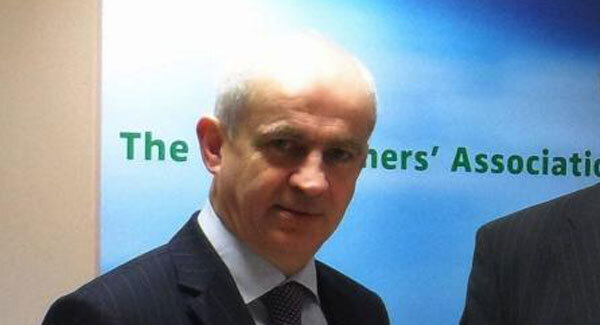
During the recent Seanad Public Consultation Committee Debate on farm safety, Peter spoke about his accident, and why he got involved with Embrace FARM, founded by Brian Rohan and his wife Norma in 2014, following the death of Brianâs father, Liam, as result of an accident on the family farm in Co Laois.
âI was very involved in construction, worked at home on the farm, and would have known a lot about safety,â Peter said.
âYet when I went home in the evening, everything went out the window. Farm safety was just forgotten about. I never thought it could happen to me but when I had people working for me, I made sure that every safety mechanism was in place for them.
âSix years ago, we were probably under pressure to get work done. At around 6pm on that Saturday evening, I let my guard down and stood too close to a power shaft that was unguarded. A piece of loose clothing got caught, and I lost my leg. I very nearly lost the second leg too, and it took months to recover.
âAt that time, when I went to hospital there were very few people to talk to, and that is why I got involved with Embrace FARM. At the time, the organisation seemed to me to be all about those who had gone, and there was nothing about the survivor, but when I talked to Brian and Norma Rohan, I realised that they were there for the likes of me too, namely, a survivor.
âThere were very few survivors to whom I could talk. I spent 16 weeks in DĂșn Laoghaire but there was nothing for a farmer or an amputee.
âThere are farmers who will talk to members of Embrace but will not talk to a professional. Members of Embrace have been involved in similar situations and are able to relate to other farmers. There is no point in talking to someone who reads about these situations from books.
âOn the issue of insurance, I was involved with the banks and had insurance for both personal accident and critical injury. One of the banks had no problem in paying out. The other bank was involved with the business.
"My wife phoned them to find out what they would pay out, and they asked what had happened. She told them that I had lost the leg and that the other one was just barely hanging on. They told her to get back to them when I lost the other leg and they would pay out then, because the policy stipulated that I had to lose two legs in order to collect.
âThe Department of Agriculture, Food, and Marine also needs to cop on, for want of a better phrase. I remember when departmental officials came out to do a farm inspection. I was walking around on crutches, but they had no sympathy for me. It is not as if we are trying to pull the wool over anyoneâs eyes.
âThe question is often asked as to why we do not make more safety-based investments on farms. If we were getting a better price for our product, we would have more money to do so, like the big companies which are able to invest in safety.
âI lost the clutch leg for driving a tractor, but there is no funding to get oneâs tractor adapted. If a farmer is paralysed from the waist down, there is no funding for a hoist. As I am self-employed, there is nothing there for me, but if I was an employee, my employer would get every kind of funding to get me back to work and to facilitate me. Why is that not available for us?â
IFA president Eddie Downey also addressed the Seanad Public Consultation Committee Debate on farm safety. He said he told every in the IFA it is essential to get the farm safety message out.
âLast year was an absolute disaster from farmersâ point of view, with 29 people losing their lives on family farms,â said Mr Downey. âWe have to think of that as 29 farm families sitting down to Christmas dinner with an empty chair at the table.â
He highlighted typical circumstances where farm safety can come into play.
âOne typical example is that if one has a tractor with the loader up and a spike on it, it is a lethal weapon,â said Mr Downey. âIf the loader is dropped to the ground with the points down, it is safe. A tractor with the handbrake off is a lethal weapon. If it is pulled, it is safe. These are simple measures which we can do and we need to raise awareness of these.
âWe suggested a scrappage scheme for PTO shafts a long time ago. Currently, if you walk into a workshop to get a cover put on a PTO shaft, the guy behind the desk will tell you that he will give you a brand new one for the same price as the cover. As a result, you walk out with two shafts, a perfectly new shaft with a cover on it and the lethal weapon. The lethal weapon should be scrapped. It is as simple as that.
âEvery farmer knows a farm is a dangerous place but they do not think their own farm is dangerous. We need to change that attitude. They need to think that when they leave the kitchen in the morning that their objective, along with every other person working on the farm, is not necessarily to get the work done but to get back to the kitchen safely that evening.â
*