Q&A: Extended GLAS date gives time for assessment
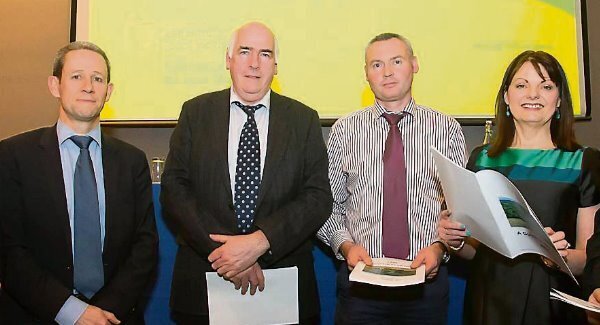
IFA Rural Development Chairman Flor McCarthy has welcomed the new May 22 closing date for GLAS, saying it gives farmers more opportunity to assess the scheme.
Q&A: Extended GLAS date gives time for assessment

IFA Rural Development Chairman Flor McCarthy has welcomed the new May 22 closing date for GLAS, saying it gives farmers more opportunity to assess the scheme.

He says there is huge interest in GLAS, particularly in commonages, Natura areas, and on livestock farms, and advised farmers to contact planners to assess the scheme and choose measures to maximise payments.

Mr McCarthy pressed Agriculture Minister Simon Coveney to indicate that the scheme will open in the autumn, for farmers not in a position to maximise their payments if they apply now.

The two week closing date extension from April 30 to May 22 is facilitated by the new May 29 closing date (extended three weeks) for the basic payment scheme.

The Department of Agriculture has published the following Q&A guide to the new agri-environmental scheme for farmers and for GLAS planners (see www.agriculture.gov.ie/media/migration/farmingschemesandpayments/glas/GLASFAQs240315.pdf for the full Q&A).

As fen and woodland is zero claimable in SPS, is this why it is ineligible for GLAS?

Yes, as all actions in GLAS — with a small number of exceptions (bird, bat and bee boxes) — must be parcels with a reference area.

We have clients who are over 140kg of N, and thus will qualify for Tier 1, if they choose to pick the wild bird cover or low emissions slurry spreading. Coming up on the GLAS tab, the kg of N only accounts for the cattle, and doesn’t take sheep numbers into account. Will the ovine stocking rate be taken into account, if we pick the options to push the applicant into a Tier 1?

The kg of N does not take into account sheep numbers.

Will those farmers who apply in the over 140kg of N/ha category be required to ensure they stay over 140kg N limit/30 ha arable for each year of the contract?

No, they will not.

What will happen if they do not reach the 140kg N limit/over 30 ha arable, in any one year of the contract?

They must continue to deliver the commitments entered into, even if they fall below the 30ha of arable or 140kg.

Can the difference between ‘high status water areas’ and ‘vulnerable water area’ be clarified. Are these ‘vulnerable water areas’ available on EPA maps, or where can they be found?

A guide to river status information on the EPA website is available on the Department of Agriculture’s website at www.agriculture.gov.ie/farmerschemespayments/glas. Follow the link to open the River Status Information on the EPA website document.

Vulnerable water site information will be available on the online application system.

If a farmer chooses the action, ‘traditional stone wall maintenance’, has the farmer the entire five-year contract to complete this work? For example, if he has 700m of stone walls, and maintains 200m in the first year, can he leave the remainder of the 500m until the fifth year to finish off?

No, all must be maintained from the start of the contract.

Under the action ‘protection of watercourses from bovines’, can you please define a watercourse?

High and vulnerable status water courses will be identified in the application system. Where the protection of watercourse action is selected, as a general action, the watercourses are those taken from the EPA Rivers layer.

If a farmer enters GLAS in Tier 1 or Tier 2, and has the required watercourses, it states in the specifications he must then choose the ‘protection of watercourses from bovines’ as a compulsory action. However, the specifications for ‘protection of watercourses from bovines’ require that the farmer must have had bovines in 2013, and retain bovines on farm for the duration of the contract. What happens if this farmer did not have bovines in 2013?

Not eligible, if no bovines in 2013 and no grass parcels contiguous to a high status water site. If a farmer is eligible for this action, the information will be provided in the online application system.

If a farmer chooses the action, ‘protection of watercourses from bovines’, is he allowed to include watercourses which are already fenced, but may need to be refenced? Also, can he include fenced watercourses which were required to be fenced in previous agri-schemes like REPS, where the fences are still fit for purpose?

Yes, the measure is to protect watercourses for the duration of contract. All watercourses on the holding must be fenced if taking this action.

Are watercourses on land which is leased for the duration of the GLAS contract eligible for submission under ‘protection of watercourses from bovines’?

Yes.

If there are lakes on the land, do these have to be fenced off?

No.

If a farmer has some of the specified farmland birds on his land, and these lands are not mapped by the NWPS, what position will this farmer be in? Can he apply to the NWPS to seek to have his lands approved and mapped and thus, apply as a Tier 1?

New datasets will not be taken from NPWS on an annual basis.

Riparian Margin: If you have wooded area between the stream and field, does this qualify as part of the margin (I know that scrub is excluded)?

The parcel must have a reference area greater than zero.

Traditional hay meadow: are you permitted to rotate plots from year to year?

It will not be permitted to rotate plots.

If a farmer has started farming in 2015, with a new herd number, will he be ineligible to apply for GLAS in 2015?

An application may be made for subsequent tranches, once a valid application has been received for the basic payment scheme, and the parcels are validated.


More in this section

Farming

Newsletter

Stay ahead of the season. Sign up for insights, expert advice and stories shaping Irish agriculture.

Cookie Policy Privacy Policy Brand Safety FAQ Help Contact Us Terms and Conditions

© Examiner Echo Group Limited