Major savings to be gained from use of pig manure as fertiliser
The nutrient content of pig manure is directly related to the solids or dry matter content of the manure.
The solids content can vary greatly, depending on the amount of water added, largely through feeding or watering of the pigs, or additionally from sources such as washing of houses, leaks, spills, or from roofs and dirty yards.
Good manure management on the pig unit will result in minimal water dilution, reducing storage and transport costs, and providing a slurry product with higher solids and nutrient content for customer farmers.
Pig manure with 4.3% solids is considered reasonable quality; anything over 5% solids is considered good quality pig manure.
The nutrient content, availability and nutrient value of pig slurry with 4.3% solids is shown in the accompanying table.
The value of pig manure as a fertiliser to tillage and grassland farmers is dependent on the amount of chemical fertiliser and the cost of the chemical nutrients replaced with pig manure.
The fertiliser value of pig manure at Pig slurry with 4.3% solids is worth €5.87 per cubic metre, when there is a requirement for N, P and K. This translates into €26.65 per 1,000 gallons.
It is important to note that if a farmer uses chemical P, it will greatly reduce the level of pig slurry he/she may use on their farm. It is important that each farmer is aware of the volume of pig slurry they may use in compliance with the “nitrate” regulations, to ensure maximum savings in fertiliser costs.
They should have a fertiliser plan done by their own agricultural adviser/consultant, and then let the pig farm manager/owner know how much they will need, as early in the year as possible.
The pig farm may then make arrangements to ensure a supply of the required volume.
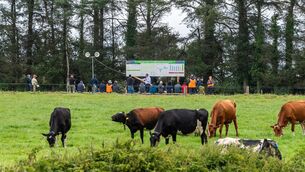
Teagasc demonstrations on farms carried out in Ballacolla, Co Laois, and Innishannon, Co Cork, last year highlighted the savings that can be made by substituting fertiliser with pig manure.
Grass yields on plots where chemical fertiliser only was used was compared to plots where a large proportion of the chemical fertiliser was substituted with pig manure from local pig farms.
Grass yields were similar for both plots, and the quite significant savings from using pig manure were clearly highlighted.
The Teagasc booklet, Pig Manure: A Valuable Fertiliser, is available in the 2014 publications section of the www.teagasc.ie website; alternatively, hard copies are available from Amy Quinn ( amy.quinn@teagasc.ie ).