ICA news: ‘Women of distinction’ are remembered at UL gathering
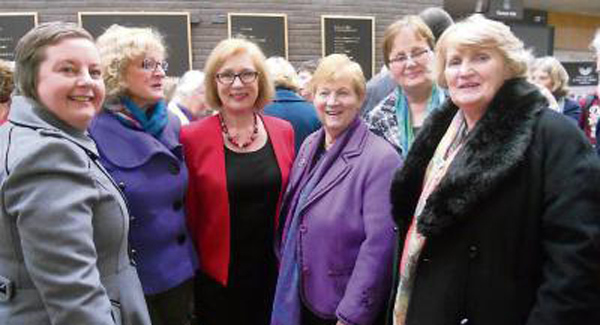
Organised by Limerick City and County Council, in association with UL, the event was attended by Sabina Higgins, as well as relatives of three ‘women of distinction’ being posthumously honoured — Charlotte Grace O’Brien, Sophia Pierce and Kate O’Brien.
“These ladies all lived most interesting lives. They were very ambitious and had a sense of equality. They broke the mould and were leaders, ahead of their time,” points out Limerick ICA PRO Patricia Cronin, who says ICA women are “a bit pioneering in their way too in terms of women coming out of the shadows”.
Charlotte Grace O’Brien, born at Cahermoyle, Co Limerick, in 1845, was an author, philanthropist and activist in Nationalist causes. Aged 36, she founded a boarding house at Queenstown for the reception and protection of girls about to emigrate.
In America, she spoke on their behalf and founded a house for them in New York. She later retired to Foynes, where she had a reputation as a plant collector. She became a Catholic in 1887 and died in 1909.
Sophia Pierce was born in 1896 and lived an unconventional life. She became a volunteer for the war effort as a dispatch rider attached to the Royal Flying Corps. She studied Agricultural Science in UCD, got interested in athletics and set up the Women’s Amateur Athletics Association.
She broke the world high-jump record in 1923, after which she joined her husband in Africa — he had a coffee farm in Kenya. They later divorced and she returned to England in 1925.
She joined the Light Aeroplane Club in London and by late 1925 was a qualified pilot. Along with Lady Bailey, she broke the world altitude record for British light aircraft in 1927.
She returned many times to Newcastle West, even flying low to drop messages to relatives and friends. She was a pilot with KLM, married three times, and died in 1939.
Novelist Kate O’Brien was born in Limerick in 1897. Her mother died when she was five. Kate became a boarder in Laurel Hill Convent in Limerick and later studied at UCD. Following graduation, she worked on the Manchester Guardian and later as a governess in Spain. She married a Dutch journalist but the marriage was short-lived.
She wrote her first play, Distinguished Villa, in 1926. Her first novel, Without My Cloak, was published in 1931. She went on to write many more novels — the most successful, The Lady, was published in 1946.
The theme of the UL event was a hopeful one: that women like these would inspire young people of the 21st century.