Oliver Moore: Algae bloom raises sustainability issue
An initiative started on organic farms in the 12 countries in the Baltic region, called Building Ecological Recycling Agriculture and Societies, signposts just what such a joined-up approach might look like.
In the Baltic Sea region farming contributes about half of all nitrogen and phosphorus leakage, which leads to high levels of marine environmental pollution.
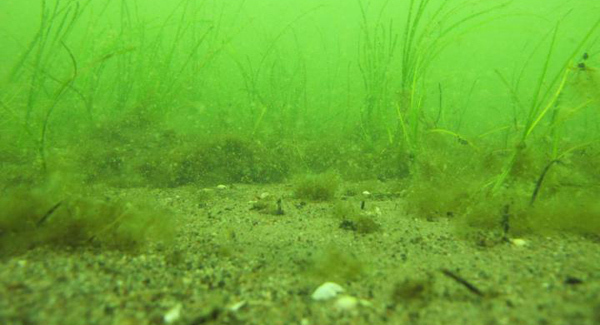
Too much nitrogen promotes excessive growth of algae that chokes other life, a process known as eutrophication. Purifying excess nitrates from drinking water is also very costly.
As NASA photographs have shown since 2010, in the Baltic, an area roughly the size of Germany — 337,000sq km — is in algae bloom. That’s 87% of the entire Baltic, a staggering size.
The Baltic initiative has another arm called Ecological Recycling Agriculture which aims for a balance between crop and livestock enterprises and to use and recycle local renewable resources.
Crop rotations include at least 30% legumes, while crop-rotation design, involving an organic crop rotation planner, facilitates plant protection without pesticides.
A sustainable balance between livestock and land is established, of 0.5 to 1.0 animal livestock unit per hectare. Effective nutrient recycling occurs within the farm and between farms, with the help of a nitrogen calculator. Farms are more than 80% self-sufficient in fodder and manure.
Ecological Recycling Agriculture is not just production-orientated. Learning materials include information on economic planning for the conversion process, and market development as well as farm case studies.
In addition, the learning centres place a strong emphasis on consumer and business engagement in the development of a Diet for a Clean Baltic. This is a diet based on healthy, high-quality and seasonal organic and local production reduced meat consumption and reduced food waste.
Building Ecological Recycling Agriculture and Societies started in 2003 with the aim to evaluate and demonstrate ecological recycling to protect the marine environment. Between 2010 and 2013 it worked to promote and implement its findings on whole food chain basis.
Farms and information centres across Baltic countries demonstrated and advocated for conversion to organic farming and the uptake of Ecological Recycling Agriculture practices.
They also helped establish and develop networks of sustainable food societies from farm to fork. The information centres serve as education and training forums for farmers, policymakers, teachers, students and the general public.
Organic farming, nutrient cycling, sustainable food societies and Diet for a Clean Baltic principles have huge potential to be supported under a common food policy.
Likewise, meat-consumption reduction has a place both in health (see Harvard Public Health research) and environmental policy.
We need global decarbonisation of up to 80% by 2050 to prevent runaway climate change. Livestock means enteric fermentation which produces methane. Grass-fed beef, though with carbon storage in the soil, means more methane than grain-fed livestock, some researchers point out.
“Since grazing animals eat mostly cellulose-rich roughage while their feedlot counterparts eat mostly simple sugars whose digestion requires no rumination, the grazing animals emit two to four times as much methane, a greenhouse gas roughly 30 times more powerful than carbon dioxide” says Professor Gidon Eshel, who is concerned with beef.
None of this augurs well for the Irish agri-food industry as presently constructed.
For more see Transitioning towards Agroecology by this author and Samuel Feret on the Arc2020 website.