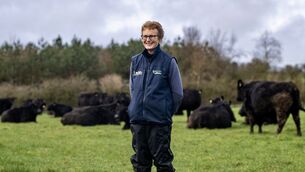
Joe Sheehy: Good things come from being positive

As in other walks of life, being positive is a very desirable characteristic in farmers, says Joe Sheehy.
Joe Sheehy: Good things come from being positive

However, it is important to distinguish between being realistically positive and recklessly ambitious.

We have witnessed both — as well as negativity — in dairy farming.

Realistically positive dairy farmers have made gradual progress despite quota restrictions since the early 1980s.

They are in a good position, facing into the future with good facilities and healthy, efficient, high-producing herds, and optimising their milk production from grass.

These are mostly family farms that were been treated very well by successive ministers of agriculture regarding milk quota allocation etc.

On the other hand, a lot of overly ambitious dairy farmers rushed into some bad systems such as out-wintering, rapid expansion of cow numbers (often without sufficient quota or feed), low yields, and minimum individual attention to animals. Many of these farmers were over-influenced by New Zealand systems.

Even more serious, some of these farmers were encouraged to borrow heavily against the value of their farms, for off-farm investments. Many of these investments performed very badly, leaving the farmers concerned in a poor situation.

We have heard a lot about rapid expansion and new untested ideas. But when these fail, we hear nothing about them. Many new expansion systems in the nineties failed, and their operators are long gone out of business.

In the early 1980s, New Zealand produced about the same amount of milk as Ireland, but they now produce four times more.

This rapid expansion, through very high borrowing for land and cows, has left most of their dairy farmers in a bad financial situation.

It is estimated that around half of New Zealand’s dairy farmers are non-viable, despite an exceptionally high price for milk last season. With a very poor milk price in New Zealand this year, the majority of their farmers will be in financial difficulties.

The New Zealand practice of standing large herds of cows on roadways for fairly long periods of torrential rain (which I often witnessed), and the resulting slurry running off to the nearest stream, is likely to be prohibited in the near future.

A few years ago, the NZ Ministry of the Environment released a survey showing that half of the country’s fresh water recreational sites were unsafe to swim in. It said fecal contamination of waterways, largely by dairy farming, was widespread.

The survey also showed that swimming in waterways caused 18,000 to 34,000 cases of water borne diseases annually.

Borrowings by NZ dairy farmers are estimated to average well over €10,000 per cow (requiring over 7c/l in interest payments).

In Denmark, the borrowings are more than twice this level, due to rapid expansion. Irish farmers must avoid the trap of over-borrowing, and working for the banks for little reward.

Teagasc recently estimated the average borrowings on Irish dairy farms at the end of 2013 at €62,000, and €94,000 (about €2,000 per cow) for the two out of three dairy farms that had debts outstanding.

More in this section

Farming

Newsletter

Keep up-to-date with all the latest developments in Farming with our weekly newsletter.

Cookie Policy Privacy Policy Brand Safety FAQ Help Contact Us Terms and Conditions

© Examiner Echo Group Limited