Spotlight on family farm heroes
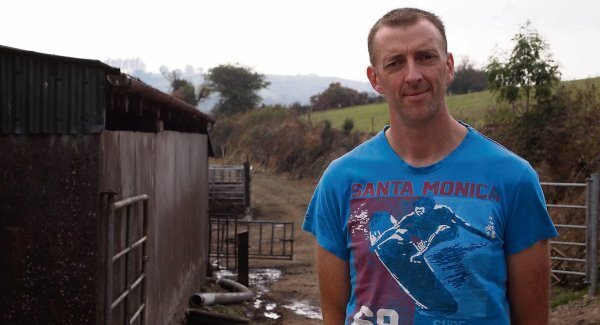
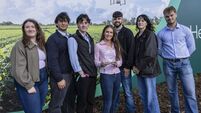
Twenty-one farmers participated in the series, which gives an insight into farming life and its practices — from beef, dairy, horse, and poultry farms, to vegetable, pig and even Christmas-tree farms.
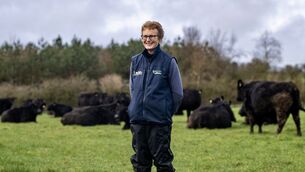
Micheál Looney, a full-time dairy farmer from Kilpatrick, Macroom, Co Cork, is one of those featured in the behind-the-scenes series, which airs each Monday at 8pm.
“I feel it’s very important for our urban counterparts to see a programme like Rare Breed — and to see where the food that they buy and eat comes from, and all of the effort that goes into its production,” said Micheál.
“We have had a great reaction, from our neighbours and friends and the local community, to the programme so far, and we look forward to watching the next programmes in the series.”
Micheál, who runs his enterprise with his wife, Annette, and his sister, Kathleen, said it was a great experience for himself and his family to work with the television crew.
The episodes in January showed Micheál welcoming new arrivals on the farm. This month, the series will show how he and other dairy farmers struggle to find storage for their slurry.
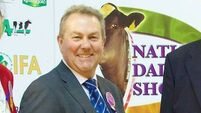
Frank McGeeney, from Knockbridge, Co Louth, is another dairy farmer featured in the series, which he said gives a good insight into the challenges that farming families faced across Ireland.
“The family-farm model is under a lot of pressure and, with the milk quotas being abolished in April, everybody producing milk in Ireland will be selling onto an open market,” said Franks.
“There’s going to be a lot of fluctuations on prices, with good years and bad years, and I think Rare Breed gives an insight into how farms deal with economic challenges. The whole series is an interesting insight into rural farming life in Ireland.”
Michael Fennelly, a beef farmer from Bawn, Stradbally, Co Laois, who specialises in the Piedmontese breed of cattle, said being involved in the series had been a real eye-opener.
“Obviously, at the start I was a bit apprehensive, but, close to the end, it made me realise how much more conscious I was of what I was farming,” said Michael.
“I think it’s great to show everyone where the food comes from, and the work farming families put in, and how your food ends up on the kitchen table.
“The care that goes into the product is at the heart of any farming story.”
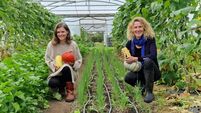
John Green, of Greenberry fruit farm in Gorey, Co Wexford, said Rare Breed had been a fascinating journey for himself and his family.
“Sometimes, when we were really busy, the thought of three hours of filming in the afternoon wouldn’t be the best prospect, but, once you get into it, it gives you a different outlook,” said John.
He said he was impressed that the filming crew were so interested in telling the real stories of farming life.
“It’s not just standing back and having a quick look at farming,” said John. “It’s about digging deeper into a farmer’s life. This is what the show represents.”
Rare Breed, sponsored by Lildl and shot in high defnition, follows on from two previously successful series, which aired on UTV in Northern Ireland.
Michael Wilson, UTV Ireland managing director, said Ireland’s agriculture-and-food industry was revered, but few consumers knew what a typical day in the life of a farming family involved.
“Rare Breed is about giving people an access-all-areas pass to one of Ireland’s biggest industries — on farms both big and small,” he said.
“The series also documents the intriguing contrasts between well-established farmers and the more tech-savvy farmers beginning their careers in the agri-sector.”
Kelda Crawford McCann, producer of Rare Breed, said she was fascinated with, and inspired by, the commitment and dedication of Ireland’s farming community — particularly when she saw Irish produce displayed on supermarket shelves across the world.
“This is the biggest series of Rare Breed we have filmed to date,” she said. “Our cameras have been out in all conditions, as farmers worked through torrential rain and beaming sun, all around the country.
“The series provides a unique insight into the people behind this massively important industry and reveals what it takes to bring food from the field to supermarket shelves and, finally, to our kitchen tables.
“Every sector of the farming industry has its own seasonal timetable and all the farmers featured are at the mercy of our notoriously fickle weather and the challenges of fluctuating prices paid for their produce.”
Agriculture Minister Simon Coveney, speaking at the launch of the series, said Irish agriculture was worth €24bn annually.
Ireland is one of the global leaders in high-quality agri-food production and exportation. Agriculture is responsible for the direct and indirect employment of thousands of people.
“As a key driver of the Irish economy, it is extremely important that we provide as much exposure and support to the industry as possible,” he said.