Help at hand for farmers seeking to expand
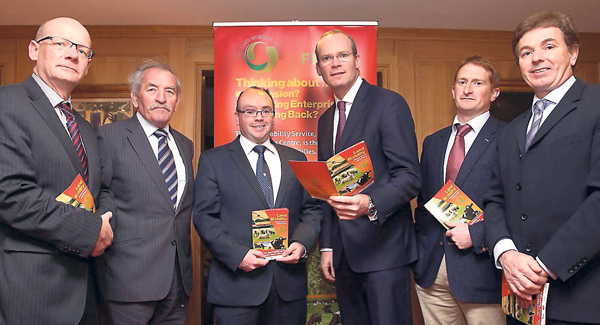
In its first year of operation, in the 10 months to November, the new Land Mobility Service (LMS) facilitated 11 long leases, 10 family partnerships, 18 contract rearing arrangements, eight non-dairy share farming arrangements, and six dairy share farming and partnership arrangements.
The LMS was set up in November, 2013, as a pilot programme centred around Kilkenny, Cork, and Roscommon, with the aim of encouraging collaborative farming and improving land mobility.
It was established by Macra na Feirme and FBD Trust in November 2013, supported by the Glanbia, Dairygold and Aurivo Co-ops.
To ensure clients are guaranteed anonymity and confidentiality, it is managed independent of the organisations involved, by Austin Finn.
Any farmer or farm family can contact the service by phoning Austin in confidence at 086-2541425 or by email at info@landmobility.ie and www.landmobility.ie through the internet.
At present, there is no fee for the service, as this initiative is funded by FBD Trust and the three lead co-ops, Dairygold, Aurivo and Glanbia. As the service expands, to finance same, a subsidised fee will apply.
Typically, when a land owner or young farmer contacts the service, we outline what options may suit.
If they are interested in exploring things further, we usually set up a meeting, at which all options are discussed, including implications for tax, single farm payment and income security.
This is a confidential process, and without obligation. If the farmer has someone in mind with whom he/she would like to collaborate, this is explored, if not, we try to match the farmer up with a suitable collaborator.
If both parties agree a framework and farm plan, we then prepare budgets and outline how an arrangement might work.
At this stage, we would encourage them to consider all implications and get opinion from or consult with their own advisers.
Further to this, we help develop a workable arrangement by mutual agreement.
Key is that the arrangement is workable and delivers for all parties. We work with legally proofed templates developed by the IFA and Teagasc, just adapting them to suit particular circumstances.
The service acts as a mediator and facilitator for existing arrangements, ensuring that they are operating as expected, or tweaking for changed circumstances.
The service represents the agreement rather than either party, an independent honest broker with expertise looking for workable solutions.
The pilot scheme demonstrated a need for such a service, the onus is on all involved to satisfy that need, and not frustrate people. Plans are in place to start the expansion process.
Every farm is different and the arrangement that suits may also differ, the process allows us to develop an arrangement type that suits all.
All arrangement types have pros and cons, what is most important is arriving at a form that suits that farm and farm family.