Caring hand for our at-risk wildlife
Because of this separation and the effect of the glaciers, Ireland has a smaller range of flora and fauna than is found elsewhere in Europe.
Much of the country was once densely covered with forests that were rich in lichens, mosses, liverworts and ferns. Remnants of these ancient forests in the Killarney and Glengarriff areas include oak interspersed with holly and birch and provided a rich habitat.
Glengarriff and Killarney are particularly rich in bryophytes and lichen species of extreme oceanic and even tropical distribution while Irish rivers and lakes contain a wide variety of fish such as salmon, trout, char and eel which all occur naturally.
Irish woods and Nature Reserves are home to foxes, badgers, deer, rabbit, otter, red squirrel and hedgehog. So while we may have a smaller range of flora and fauna than other European countries, what we do have is precious and in need of protection.
Now two wildlife organisations, Wildlife Trust and Irish Wildlife Matters, dedicated to caring for injured wildlife, are developing a wildlife directory, aimed at people who find an injured animal.
We’re bound together in a delicate web whose intricate tendrils are mutually dependent. But apart from the dictates of self-interest, the beauty and majesty of animals living in their natural element is something that is good for the soul and is their right.
But it’s not only a question of helping injured animals. Without the proper care and conservation, it’s all too easy for some species to disappear.
Wildlife management attempts to balance the needs of wildlife with the needs of people, using the best available science. It aims to halt the loss in the Earth’s biodiversity and is concerned with the preservation and improvement of habitats such as reforestation, pest control, irrigation, coppicing and hedge laying.
It was in the late 19th century that the first pieces of wildlife legislation began to emerge. Before that, any controls were usually at the whim of the individual landowner. William the Conqueror for instance, decreed that it was as great a crime to kill one of the king’s deer, as it was to kill one of his subjects.
One of the earliest protection groups was founded in the UK in 1889, at the house of one Emily Williamson at her house in Manchester. They were known as the Plumage League and campaigned against the use of great crested grebe and kittiwake skins and feathers in fur clothing. This group eventually became known as the RSPB.
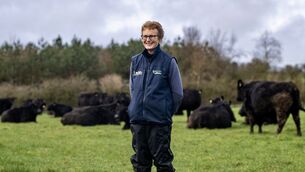
So the involvement of the public has always been essential in the evolution of wildlife welfare. Lynette Lewis, a veterinary nurse who lives in Cobh, has had many years of experience in caring for exotics and wildlife, and is at the forefront of establishing a wildlife registry for those who have rescued wildlife and for those who’d like to become more involved.
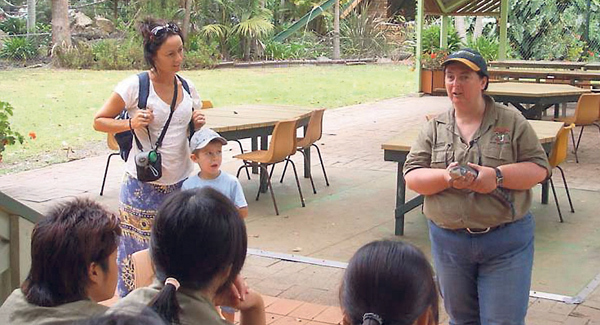
“Well, I was always around animals. I was brought up on a large farm and then for a while, I was an organic farmer. I went to live in Australia in the eighties, where I worked as a Vetinary nurse and trained to become a zookeeper. During that time, I worked in Aquaria, volunteered in a small zoo, two wildlife sanctuaries and at a major centre for sea turtle rescue.”
“They were really very good. We saw a lot of wildlife in the Vets where I worked and there was a specialised wildlife hospital in the area. When I came back to Ireland, it was a bit of a shock to realise that such facilities didn’t exist, which is why I was keen to become involved with this project of helping to set up a directory of rescued wildlife and those who might have land where we could do what is known as soft release for recovered animals. That means in essence a place where an injured but recovered animals could be returned to the wilds in a safe environment where they would be fed and monitored until they were totally able to fend for themselves.”
“ Its true. It’s ridiculous when you think that you have to have a license for a dog but you can own a tiger and not have to have anything. And there are a lot of exotics escaping or being let loose because people can’t handle them. Open Farms and Petting zoos can cause a problem too because sometimes the owners get in a few exotic animals but they have no real idea of how to care for them. I came back to Ireland In February after working in the UK at The People’s Dispensary For Sick Animals.”
“That’s right. Being handled by a human can be terrifying for a wild animal whose natural instinct is to get away. And they can suffer from what is known as capture myopathy. Chemicals invade the muscles and although an animal might appear to have recovered, they can suddenly drop dead two or three weeks later from cardiac failure. So it’s not good if they have to be transported for miles to receive care either. A network of local facilities would be much better. At the moment, I am working on setting up my own Animal Care Consultancy. I am already receiving a lot of calls from people who need advice. As well as the directory, I’d like to see a specialised Rescue Centre in Cork. We need to care for our wildlife.”