Price critical for profitability of cull fattening
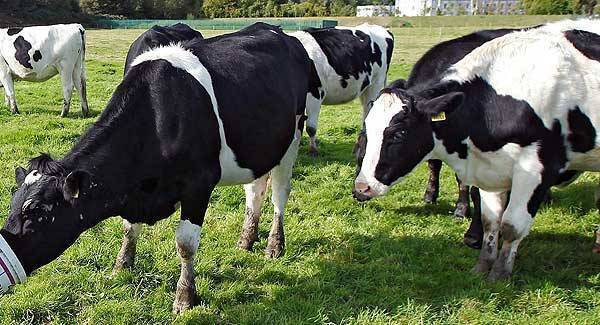
With sufficient grass available on most farms this autumn, if cows for culling are dried off early, they should be in fairly good condition before the winter.
Obviously, it is better to sell well-conditioned cows, but young cows that have the potential to put on condition and weight might justify an indoor feeding period before selling.
The profit from this exercise depends on a substantial rise in price and grade between autumn and finishing.
It will require six to seven tonnes of silage per cow to carry culls over winter.
In an experiment carried out at Moorepark, cull cows fattened on good quality silage took 125 days to finish, consuming 11 kg of dry matter (DM) per day (or seven tonnes of silage at 20% DM). Three other groups of cull cows, fed 3, 6 and 9 kg in DM of concentrates respectively took 109, 95 and 83 days respectively to finish.
In a situation where there is plenty of good quality silage available on the farm, the all-silage option is the most economical.
However, if silage or other good forage is scarce, carrying culls over winter is unlikely to be profitable.
Of course, as with any other cattle finishing system, the price rise over the feeding period will be the main determinant of profit. With a significant drop in the price of cereals this year, finishing suitable culls with fairly high concentrate levels may suit some farmers.
Cows on good quality silage will not respond to concentrates as well as younger cattle, because of their higher rumen intake.
A trial with 600 kg cows at condition score 2.6, gaining 0.9 kg per day, indicated that the total cost of finishing, including silage (1,100 kg of DM) and meal (335 kg) is about €370.