EU unlikely to scrap super-levy now, says ICMSA
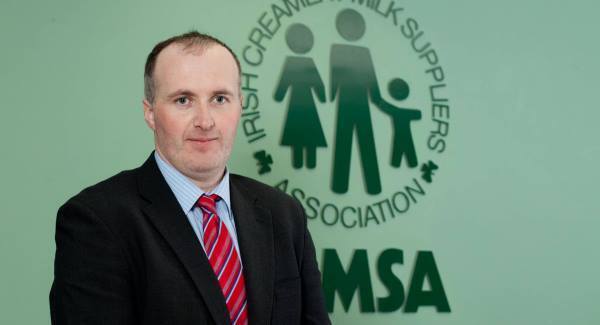
Mr McCormack, the ICMSA’s deputy president and chairman of the group’s dairy committee, was responding to a call by Mairead McGuinness MEP for the system to be scrapped.
He said that while he understood Ms McGuinness’s arguments and saw the obvious benefits for Irish farmers in an over-quota situation, he would not be confident the EU would move to set aside a system scheduled to end, in any case, in just over six months. He said even before the Russian ban there was already a deep-rooted conviction among a number of EU states not to relax the quota regime.
“We’d be very sure that France, for instance, will not contemplate this kind of measure because the mood in that state seems — if anything — to be moving increasingly towards the retention of some meaningful degree of supply-control.
“From an Irish perspective, super-levy is going to be a serious issue across the country this year with many farmers drying off cows at this stage and going to once-a-day milking. ICMSA believes that if any concession is likely to be forthcoming, the best option is to try and secure flexibility in relation to the butterfat calculation and [Agriculture Minister Simon Coveney’s] priority in relation to milk quota should lie in that direction.
“In relation to the Russian ban, decisive action is required from the EU Commission on this matter and farmers cannot be left to carry the cost of EU sanctions. We see growing concerns regarding market outlets for dairy products from Eastern European countries, measures are required to ensure that their product does not displace or take our markets and, in this regard, the whole range of supports including aids to private storage, exports refunds and intervention must be utilised and — importantly — utilised at a realistic price.
“Intervention prices are currently at a level that is simply unsustainable and EU farm ministers have the legal power to increase these prices... Dairy farming across the EU is entering a critical period and the union has an obligation to support it with the necessary finance to come from the wider EU budget — given that the problem is a political one — and most certainly not from the CAP budget and from farmers’ Single Farm Payment.”
He also welcomed reports from the EU that the 1% EU Crisis Reserve for 2014 will be returned to farmers and he called on the minister to ensure that this is the case and that adequate dairy supports are put in place to deal with the Russian crisis.







