Used machinery and the VAT margin
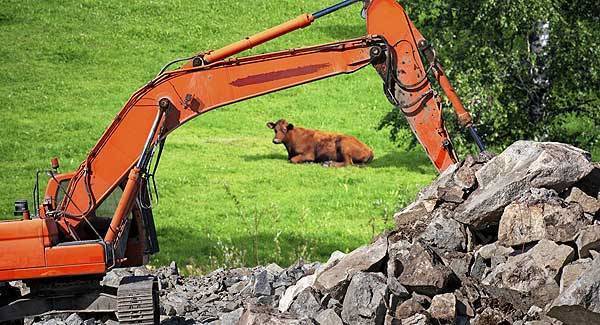
Changes in VAT rules over the past number of years have significantly altered the second hand machinery market.
Used machinery and the VAT margin

Up until January 1, 2010, a special scheme applied to dealers who acquired agricultural machinery from unregistered farmers.Under that scheme, the dealer was entitled to claim back the residual amount of VAT on the purchase of machinery from an unregistered farmer. The dealer would then pay VAT on the full cost of the machine.

By way of example, take a machinery dealer who took a trade-in of a tractor, giving the farmer a value for the trade-in of €20,000.

If the dealer sold on the tractor for €22,000, under the old scheme, the dealer was entitled to reclaim VAT on the purchase, even though he was purchasing from an unregistered farmer as a result of an imputed VAT amount.

The maths on this worked out as follows. Price received by farmer: €20,000. It is regarded as being a net price of €16,528.93 plus VAT of €3,471.

On the onward sale, the dealer sold the tractor for €22,000 including VAT, which works out at a net price of €18,182, with VAT of €3,818.

The dealer effectively made a profit of €2,000, including VAT, and when the transaction is stripped back, the net effect is that the dealer has made €1,652 for his troubles, after the VAT on his own profits has been paid.

This special scheme was terminated in January 2010, although there were some rules dealing with a short cross-over period thereafter.

Now, the new rules dictate that dealers of secondhand agricultural machinery come under a margin scheme. As such, the dealer now neither claims VAT on the purchase, nor pays VAT on the full sale; instead he pays VAT just on his margin.

Taking the above example, a dealer who trades in a tractor for €20,000 and onward sells the same piece of equipment for €22,000 has made a profit of €2,000, which is deemed to be a VAT inclusive price, again giving an identical return of €1,652, as was previously the case. However, from a farmer’s perspective, the change in rules throws up an inherent disadvantage. Under the old scheme, a VAT-registered farmer who bought the tractor from the dealer at a VAT-inclusive price of €22,000 was entitled to reclaim VAT on the purchase.

This right to deduct an input credit would have saved a VAT-registered farmer a fairly sizeable amount, of €3,818. In effect, the old rules recycled machinery from unregistered farmers back into a VAT-able event.

The new rules differ significantly, in that the sale of a second-hand agricultural machine which originated from a VAT-registered farmer is simply out of the VAT loop for good.

In fact, not even the VAT charged on the margin can be reclaimed by a registered farmer.

To add complexity, there are rules which allow a dealer to opt out of the margin scheme for particular sales. In these cases, the dealer can issue a VAT invoice for the whole transaction, but must account for VAT in full, and cannot claim any VAT back on the initial purchase. Following on with our example, a VAT-registered farmer looking to buy two almost identical tractors, one coming from a previously VAT-registered stable, and one coming from an unregistered farmer, is of course going to choose to buy the tractor which gives him a significant VAT rebate.

As such, the new rules have created a divide in the second hand machinery market. Machinery coming with a VAT invoice has become more of a rarity, and is now more valuable where the purchaser is looking to claim the VAT back.

A side-effect of this new rule is that VAT-registered farmers are now more inclined to look to our UK neighbours when sourcing secondhand machinery, given that the vast majority of farmers in the UK are VAT-registered, in contrast to Ireland.

A further advantage is that an Irish-registered farmer looking to import a second-hand machine can in many instances purchase the item net of VAT, under the intra-community VAT rules. In this way, the registered farmer’s saving is immediate, and the whole process avoids the sometimes slow procedure in getting VAT back on Irish purchases.

More in this section

Farming

Newsletter

Stay ahead of the season. Sign up for insights, expert advice and stories shaping Irish agriculture.

Cookie Policy Privacy Policy Brand Safety FAQ Help Contact Us Terms and Conditions

© Examiner Echo Group Limited