Providing building blocks of rural life
To be without a home is to be without a centre, adrift with no anchor.
And now there are families — some working, some on benefits — who will have to leave their home, having received notices of substantial rent increases.
These newly dispossessed will have to pound the streets in panic at the frightening rise in rents since they were last in the market looking for a home.
If they are unable to reconcile their income with the rents being asked, entire families might find themselves homeless or in one-room emergency accommodation, where there are no cooking facilities, children can’t play, and family life degenerates into little more than a test of endurance.
A shortage of affordable housing and wildly escalating rises in rents have sparked a housing crisis in Dublin and other parts of the country.
Jesuit priest Father Peter McVerry, who has been a champion of Dublin’s homeless, says this is the worst housing crisis in his 40 years of working with the city’s poorest.
But he fears more bad news is to come.
“We need urgently to get back to building social housing.That’s expensive, but if we don’t do it, we are going to have a city here full of homeless people, and homeless families living on the streets.
“We’ve 100,000 households on the social housing waiting list”
And yet, and yet…
Not all that far away from the mean streets of our cities, a parallel disaster is unfolding — but this is one of depopulation, empty houses and declining communities, as rural Ireland continues to suffer from swingeing cutbacks, with disappearing post offices, hospitals, schools, and Garda stations.
“Depopulation is the biggest threat to the future of rural Ireland,” says Margaret Peters of the West Cork Community Alliance.
“Our rural communities are loosing their vital services such as the post office, local shop, primary school, pub, Garda stations etc.
“Enabling urban-based families to move to rural areas through a rural resettlement scheme would be of enormous benefit, both to the families making the move and to the communities embracing them.
“Of course, much planning is necessary to encourage and enable families to make this transition.
“It is important that adequate affordable housing is available, and a National Broadband Plan, which would build fibre broadband infrastructure to small towns and villages around the country, is imperative in this day and age.
“There is huge potential for the development of tourism and artisan food products in rural Ireland.
“And the Wild Atlantic Way will undoubtedly create more opportunities. I believe there was never a better time for a well-planned and funded rural resettlement scheme.”
In the 1990s, a popular government-supported scheme facilitated city dwellers in need of housing to relocate to rural locations.
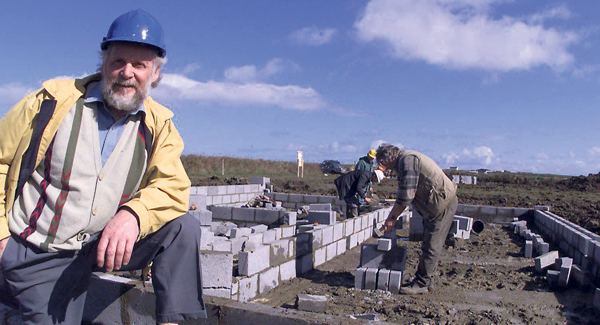
The scheme is the brainchild of Jim Connolly, a sculptor from Co Clare. Jim was — and still is — concerned about the levels of young people migrating from rural areas and the impact this has on rural towns and villages.
Jim worked tirelessly on informing interested urban dwellers about the merits of moving to the countryside.
His organisation offered practical support in sourcing suitable accommodation, and sound advice on many other practicalities. Jim ran Rural Resettlement Ireland (RRI) from his own home.
It is an apolitical, non-profit and voluntary organisation.
In its first eight years, RRI helped some 400 families move from the city to 19 different counties, only a fraction of those who had applied.
Now in its 24th year, RRI seems like a potential win-win situation for both stressed urban dwellers and decimated rural communities.
Jim Connolly still heads RRI, and is as passionate as ever he was about the damage that cutbacks are having to rural Ireland’s infrastructure.
“It’s a very large question. It seems to me that every effort continues to be made to deny and depopulate rural Ireland and destroy rural culture.
One of the questions we have to ask ourselves is what part the denial of planning has had in rural depopulation.
The distribution of the world’s population indicates that 50% of people now live in urban areas.
But for us in Ireland, no matter where we live, we have a rural culture in our DNA, and that includes the planners who are making these decisions that are exacerbated by economics.”
“I’m afraid that we are heading for “green deserts” where entire villages are deserted.
When you don’t have people, then you have nothing.Schools, homes, it’s all gone.Schools are at the heart of rural culture, and many are of a very high quality, I believe that it is ruthless — if not treasonable — to let basic infrastructures fall apart.
They are simply not looking at the big picture.”
“Most families integrated really well.But they were well prepared.And a lot of those little girls who relocated are now mammies with two or three kids of their own who are attending local schools.One of those first resettlement families saved the job of a local teacher.That school is now thriving, has a new addition and is providing a service for the next generation.
And if these families had stayed in the city, there would have been maybe four more households adding to the problems of housing and other resources.
Urban populations continue to grow from within.”
” I believe there has to be a stay on the closure of rural services.
All these problems are political problems and there isn’t one TD who will stand up and demand this.
But for those urban dwellers who are considering resettlement, there are still many opportunities to live a good life for themselves and their families.
I’d like to see a moratorium on all these cutbacks that was reassessed in five years.
Because once post offices, Garda stations and other services are gone, they are unlikely to come back again.”