Worth looking at forward buying
Accurate feed budgeting is essential. If you are not sure how to construct yours, seek expert advice; mistakes could prove very costly. Luckily, it has been a good year for quality forage production, so most silage, straw or hay for sale is likely to be of very good feed value. But take care not to buy feeds marketed as “great value”, but which are difficult to manage and feed.
With the current unrest in the Ukraine ( a major grain exporter), it may well be worth looking at forward buying of straights, because there could be some price volatility ahead. The barley price has already strengthened, in the last week. Forward buying does not mean paying for it now, it is agreeing a price so that your supplier can book forward from importers.
Autumn calving suckler herds are gearing up for calving now, if they haven’t already started. Obviously, most of the calvings will occur outdoors. However, you may need to bring in cows if there are difficulties.
Try to have everything ready for action. Check that water troughs in calving boxes are working. Dust down the calving jack and ensure it is working, and the two ropes are present.
Check that your camera is working correctly. Make sure that if you have a fully functioning calving gate.
Remember, cows can get very aggressive around calving, so properly functioning equipment is essential.
Check that you have sufficient tags for the number of calves due to be born.
It is important not to have sucklers over-conditioned at calving. Ideally, cows should have been dried off in the condition at which you would like to calve them down. Suckler cows too fat at calving tend to have more difficult calvings, and metabolic disorders, with a possible negative effect on subsequent fertility.
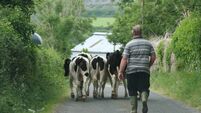
Keep cows on a relatively low plane of nutrition, which may involve a leader-follower system of dry cows running behind youngstock, cows with calves, or finishers. This means that the productive animals can get the best of the grass, and the dry cows can tidy up behind.
It is important for grass quality that dry cows follow other stock within 24-48 hours, otherwise they will eat regrowths rather than the grass left behind.
If you must graze dry sucklers on good quality swards, use a strip wire, and consider supplementing with some straw, to restrict total energy intake.
Keep a good quality pre-calver mineral in front of all dry sucklers for at least four weeks before calving. If you know of specific mineral deficiencies on your farm, then you may need to give cows a bolus, or get a specific mineral blend made up.
Once cows have calved, it is essential to get sufficient colostrum into calves. If calves are slow to drink, or cows won’t stand, get them into a handling facility, to get the colostrum fed. Get cows and calves to good quality grass as soon as possible, to boost the cow’s energy intake for milk production and recovery. Monitor cows for metabolic disorders in the first few days after calving.