Teat disinfection kills infections and can raise profits
The financial benefits of a lower somatic cell count (SCC) should not be underestimated.
For example, if a 100-cow herd was to reduce its SCC from 250,000 cells/ml to 150,000 cells/ml, the farm would generate more than 8,500 extra profit, even with a milk price of 32c/l.
When calculating the true cost of mastitis, it is easy to quantify the obvious costs, but the hidden ones have to be considered too. Dairy farmers can see how much more profit they could earn with a lower herd SCC, by using the CostCheck interactive calculator.
The objective of CostCheck is to estimate the potential gains in profit from reducing the incidence of mastitis (both clinical cases and cows with high SCC) on the dairy farm, using their own data. This tool was developed by Teagasc Moorepark in consultation with the CellCheck Technical Working Group. The CostCheck calculator can be downloaded from the Animal Health Ireland website (www.animalhealthireland.ie) or the Teagasc website (www.teagasc.ie).
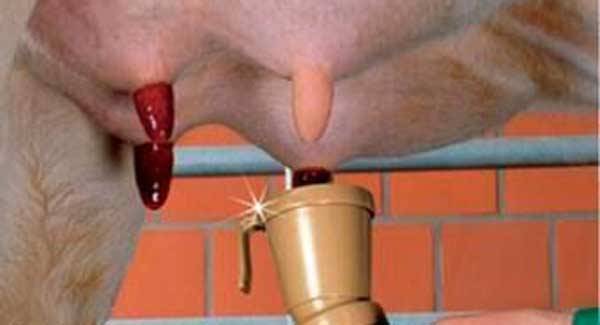
***Teat disinfection after milking can reduce new mastitis infections by 50%, by killing the bacteria that are left behind after milking, and by maintaining the teat skin in good condition. The goal should be to cover all the skin, on all of the teats, of all of the cows, all of the time. The only part of the milking machine that comes in contact with the cow is the liner, and it happens every time the cow is milked. So even in summer you need to make sure that the whole teat surface touched by the cluster liner is disinfected — a drop of teat disinfectant at the end of the teat is not enough. How do you know if you’re getting good coverage?
**Look at teats after spraying – it can help if you use a product that’s clearly visible on the teat skin after it’s been sprayed on. All sides of the teat barrel should be covered.
**Calculate the volume used per milking — you need to allow at least 15mL/cow/milking. So for example, if you’re milking 100 cows, you should be using at least 1.5L of teat spray at each milking.
**Wrap a paper towel around the barrel of the teat, then carefully remove and examine the pattern. A patchy picture indicates poor coverage of the teat, while a “solid” block means teats have been well covered.
****change milk liners after 2,000 milkings. If you have eight rows milked twice per day, then each liner has to do 16 milkings per day. In that situation, liners should be changed after 125 days (2,000 divided by 16);
*****avoid penalties for TBC by ensuring that your washing/cleaning routine is correct.
See www.agresearch.teagasc.ie/moorepark/Articles/milking%20machine%20cleaning%20routines.pdf for the four most popular wash routines, summarised.