Change on cards for meat culture
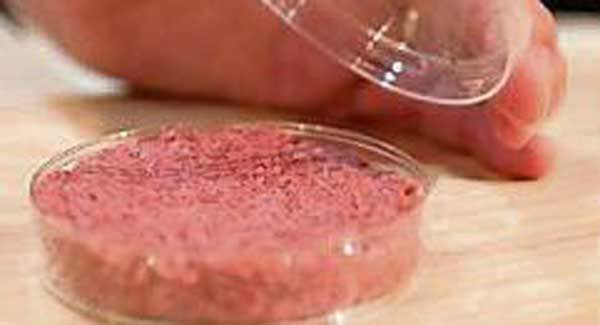
In-vitro meat In-vitro meat, or cultured meat, is being developed by scientists searching for new sources of protein to feed the world. But the latest update from researchers is that meat prices will have to rise significantly before cultured meat is commercially viable.
They are working on growing muscle tissue – that is, meat – from animal stem cells, with the aid of tissue culture techniques. No actual animals are involved, and production of in-vitro meat is expected to be more efficient and more sustainable.
The Dutch ministry of Economic Affairs, Agriculture and Innovation is subsidising a four-year multi-disciplinary research project on in-vitro meat. The central question posed for the researchers involved, from the fields of biology, social sciences and ethics, is whether in-vitro meat could be developed into an attractive product, and if so, how.
Scientific advances have already made it possible to cultivate stem cells into laboratory-grown organs — and could one day be used to develop eco-friendly meat products. Researchers at Wageningen University in the Netherlands say small-scale production already looks particularly promising, technologically and for societal acceptance.
Economic feasibility, however, is seen as the real obstacle.” If it can be produced in a cost-effective way, cultured meat will appeal to those who want an ethical alternative to intensive farming — greener, less polluting, consuming less energy, and more animal-friendly.
Cultured meat is part of a protein transition research areas which includes partly substituting meat with vegetarian products, keeping fewer animals in better circumstances, eating insects, etc. It stems from a belief that rising demand levels for meat are unsustainable in terms of environmental pollution and energy usage.
In 2013, Maastricht University Professor Mark Post created and consumed a lab-grown burger from using muscle cells taken from a cow. Other nations have been pursuing similar research, including US researchers funded by NASA looking for a way to allow astronauts to grow their own meat in space.