Drones may replace tractors for spraying
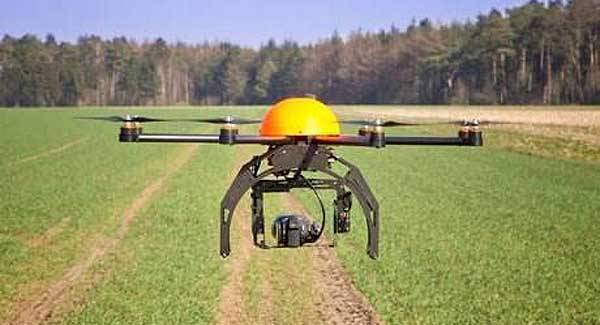
Drones are unmanned aerial vehicles — an industry that will have an $82bn economic impact and employ 100,000 by 2025, predicts the Association for Unmanned Vehicle Systems International (AUVSI), a non-profit group that advocates use of drones.
The history of drones begins as early as World War I, but it wasn’t until the 1970s that western militaries began to look for new ways to keep their human pilots from harm.
Amazon has announced plans to deliver packages by drone; Google is considering drones to provide wireless internet access to remote locations; NBC used them in the Winter Olympics to capture new camera angles; and drones are starting to transform agriculture, too.
Boeing, Oregon State University, and the USDA have come together to use drones to help potato farmers in Oregon.
At planting time, from the air, they look for moisture and nutrient deficiencies in crops. Those attending the recent Alltech Annual International Symposium, in the US, were told how highly-advanced imaging equipment notices details, in the potato fields, too subtle for the human eye to detect, which alert farmers to apply treatments before the crops are impacted significantly.
Drones can also be used to monitor herds, as they can detect unusual body temperatures and other conditions.
According to AUVSI, “unmanned aerial vehicles can fly over fields to perform crop-dusting duties, and also take pictures or video to track plant growth.
“Robots can also perform more delicate procedures, such as picking fruit or harvesting,” says the AUVSI.
Aerial drones can cover six to seven times more area than a tractor, and, because they remain aloft, they cannot cause soil compaction, erosion, and crop damage.
European vice president of Alltech, Patrick Charlton, asked: “What if farmers become more familiar with piloting drones than they are with driving tractors?
“How can drones be best-tailored for aerial spraying, enabling them to access hard-to-reach areas with greater precision than that offered by planes?
“How might drones facilitate our pursuit of traceability and sustainability?
“What challenges might drones bring with them, and how do they compare with the benefits?
“If we want to ensure food security in the face of a rapidly growing population, then we need to wholeheartedly engage with new technologies, like drones,” Mr Charlton said.