Court ruling raises big issues for farm divorce
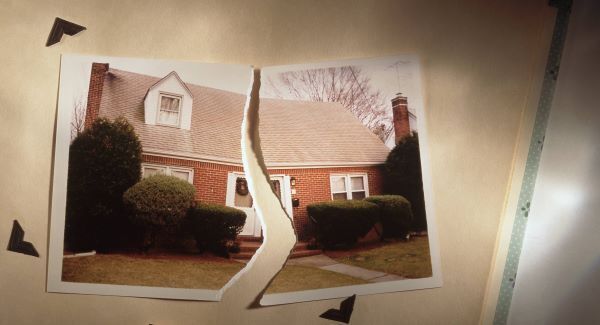
The Supreme Court stated that a Deed of Separation should be given significant weight by a court when determining what is “proper provision” on divorce, particularly if it contains a “full and final settlement” clause. Picture: Thinkstock
In Ireland, there is no such thing as a clean break on separation or divorce, and it is possible for a spouse to return to court at a later date, seeking additional financial support.
The court has an obligation when granting a divorce to satisfy itself that “proper provision” exists for both parties, and this may involve amending the terms of the agreement entered into by the parties at separation.
However, a recent Supreme Court decision in the case of ‘G vs G’ has curtailed the ability of one party to seek a “second bite of the cherry” on divorce.
The judgment was given by Chief Justice Denham in the case of ‘G vs G’ and addresses the important question of what constitutes “proper provision” on the granting of a divorce, in circumstances where a separation has previously been entered into by the parties, and it contains a “full and final settlement” clause.
In this particular case, the parties were married in 1977 and separated in 1995. The couple lived in a house inherited by the husband, and the wife brought £3,000 in savings to the marriage. They had no children and they ran a farm and garage. The husband started to pursue property development.
The parties entered into a Deed of Separation in 1996, pursuant to which the husband agreed to pay the wife maintenance of £100 per week for two years, decreasing to £50 per week thereafter. He also gave her a house in the estate he developed, and a lump sum of £70,000, and agreed to pay her VHI.
The Deed of Separation also contained a “full and final settlement” clause, which stated that the agreement constituted a full and final settlement of all present and future financial claims to be made by either party, including where one party is seeking a divorce at a later date.
After the Deed of Separation was entered into, the husband inherited properties, sold them and bought other lands, which he later sold for €19 million. The maintenance was increased to €1,200 per month, pending a hearing of the divorce application. This was further increased to €2,400 per month by the High Court.
The wife brought a claim for divorce and that “proper provision” be made for her.
The wife still lived in the house the husband provided for her, and had spent the lump sum of €70,000, and had not invested it. She had also incurred significant debts, and suffered with ill-health.
The divorce came before the High Court in May 2009, by which time the husband’s assets were worth €21 million. The High Court granted the divorce, and made the following orders in favour of the wife:
1. €600,000 for the purchase of an annuity.
2. €300,000 for the purchase of a pension.
3. Maintenance of €54,000 per annum.
4. €1 million for the purchase of a second house for the wife.
5. A further lump sum of €600,000.
6. A payment of half the balance of the wife’s legal costs.
The Supreme Court made a number of important points.
A Deed of Separation should be given significant weight by a court when determining what is “proper provision” on divorce, particularly if it contains a “full and final settlement” clause.
A clean break is a legitimate expectation in Irish law, and “proper provision” does not mean redistribution of wealth acquired by one party.
A change in circumstances of one party should be considered by the court — for example illness.
If a spouse acquires wealth after a separation that is unconnected to any joint project during their married life, there is no automatic right of the other spouse to further monies or assets. The court said that inherited assets should not be seen as assets obtained by both parties in a marriage.
This point is important for farmers who find themselves facing a divorce — how and when the farm was bequeathed would be central to any division of assets. A spouse should not be compensated for their own incompetence or indiscretion to the detriment of the other party.
The Supreme Court allowed the appeal, and sent the case back to the High Court, with the comment that the level of provision awarded by the High Court was excessive.
This case provided much needed certainty at the time on the weight to be given to a Deed of Separation and “a full and final settlement” clause in the terms of separation agreement. The practice of using divorce as an opportunity to have a “second bite of the cherry” appears to have been somewhat restricted by this judgment.
While the above judgment is significant, each case will of course depend on its own facts and circumstances. For example, in the above case, the court did not have to consider the needs of any dependant children. Despite all of the above being taken into account, a court always has a duty to ensure that proper provision is made for parties involved.
If a separation agreement does not provide proper provision, or the parties’ circumstances change, for example with a deterioration in health, then the court always has the power to ensure that proper provision is put in place at the divorce stage.