West Cork to reflect on lives cut short
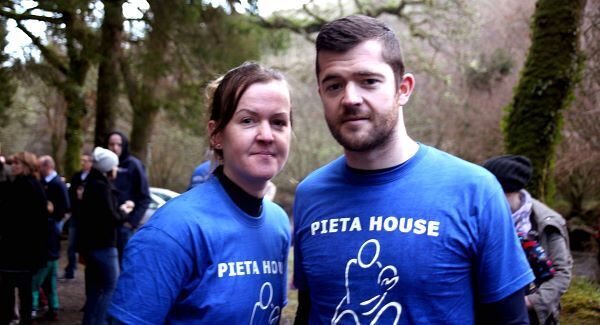
Mental health needs to be talked about like any other illness. People need to know that it’s OK to have a problem.
West Cork to reflect on lives cut short

Joan Freeman, founder and CEO of suicide prevention charity, Pieta House, believes that the crisis of suicide in Ireland is being ignored, and says that the organisation deals with 60 new cases every week, and that 10 more people die by suicide each week.

She believes that suicide is an election issue.

“It appears that suicide is a warm blanket used by our politicians who are campaigning, only to be shrugged off when elected,” she said. “If the same numbers of people were killed on the roads every week, action would have been taken already. It is about creating an awareness of hope, and that’s what each of us does every time we take a step,” she says.

There was a time when suicide was considered to be a mortal sin, and any discussion of it was taboo.

But those attitudes are changing. People are willing to talk about it, and many want to help. Today, Pieta House has a staff of 170 and their centres helped 4,000 people last year.

Meanwhile, the charity 3TS is working to help prevent further deaths by suicide through research, intervention support and innovative arts projects.

They believe that sometimes words are not enough to tell a story. Sometimes a photo or even a song can evoke a stronger memory of a lost loved one.

The arts project ‘21 Grams’ — which is the perceived weight of the human soul — is a powerful work, depicting 90 suspended men’s white shirt collars; each weighs 21 grams. It symbolises the aftermath of suicide, a reverence for life and living, and the void death by suicide leaves behind.

100 Lived Lives and Lost Portraits (also by artist Seamus McGuinness) is also a powerful and evocative installation.

And in January this year, Dublin City Public Libraries launched their bibliotherapy ‘Power of Words’ scheme, using books as therapy in the treatment of mental illness.

The Power of Words Scheme helps to provide different perspectives and teach skills for coping, resilience and behaviour change. These are some of the increasingly innovative approaches to the issue of suicide prevention, as charities search for different ways to communicate the message that there is hope and non-judgemental support out there for those who are in difficulty.

3TS advocates the establishment of a Suicide Prevention Authority based on guidelines used by the Road Safety Authority. They believe we urgently need a cultural shift in attitudes toward mental health and suicide as in road safety, where a culture of drink driving eventually became regarded as reprehensible, and the wearing of seat belts, once regarded as an optional extra, become second nature.

A suicide authority could, they believe, co-ordinate such a shift with education and technology and work toward improving attitudes that are established in law with statutory functions. Such a body could co-ordinate and regulate all charities involved in suicide prevention, mental health and related fields. 3TS is urging people to ask local election candidates who are currently campaigning what they and their parties are doing to prevent suicide in your locality and at national level.

Elber Twomey would really welcome this sort of cohesion. Elber’s family died at the hands of a suicidal taxi driver who deliberately crashed into their car as they made their way to catch the ferry home, after a holiday in the UK.

I talked to Elber when she took a break from the preparations for the family’s first annual “remorial” weekend to honour and celebrate the lives of her beloved son, daughter, and husband, Oisin, Elber Marie and Con.

It takes place on June 6-8 (see website details below).

Elber, how are the preparations for the “remorial” weekend going? Who came up with the word “remorial” to describe it?

“The preparations are going great. We’re very busy right now, but everything’s on target, and we think it’s going to be a great event that will celebrate the lives of our beauties. We hope to raise money for the hospitals who looked after us and for awareness of the stigma attached to mental health. And I must say that the support we’ve had has been fantastic. The idea for ‘remorial’ came from my brother. I’ve never liked the word memorial. It’s too dark, gloomy. And this is a celebration, though I know it will be very difficult and emotional. So this will remember and celebrate the good and happy times, and make sure that our beauties are never forgotten.”

You’ve also become active in campaigning for improvements in suicide prevention, I believe?

“Yes. I have good faith Thank God, am a fairly strong character and am quite stubborn. I had many surgeries, and yet I was able to get in the car eventually and drive myself. I still have the grace of independence Thank God. Maybe I have been saved for something. I get up in the morning, I got to Mass and visit the cemetery. Then home and get to work. I started looking into the statistics on Irish road accidents, and I was shocked at how many cars may have been used by people with suicidal ideation. There are in my mind scary findings. One of the services I’d like to help establish is a national Suicide Prevention Training scheme for all gardaí. They often have a terrible job to do, and this could help them to cope. I really believe that this training would help the Garda as well as the suicidal soul.”

There are many good NGOs working in this area, but no unifying body?

“There is a lot being done, and it would be good if these efforts could be co-ordinated somehow. Changing people’s attitudes to mental health is very important. How do the authorities review a suicidal person? My argument is that suicidal souls are not murderers or thieves, and must be dealt with very carefully. My barrister said not to do so was like seeing someone perched on the edge of a cliff, then running up to them and blowing a whistle.”

Is attitude the biggest change we need to make, do you think?

“It’s very important that we get rid of the stigma attached to mental health, so that it can be dealt with and talked about like any other illness. People need to know that it’s OK to have a problem. Jeepers we all have them. And that the important thing to do is to talk about it. If we could help to save one person, it would be fantastic. Meanwhile, our weekend will be a special celebration of the preciousness of life and the lives of our beautiful little man baba Oisín, our beautiful little lady baby Elber Marie and my darling Con.”

* www.twomeyfamilyremorial.com

* www.pieta.ie

Pieta’s advice on suicide prevention

Pieta House founder Joan Freeman says politicians often ignore suicide issue.

Elber Twomey’s son, Oisin, one of three family members who died when a suicidal driver crashed into their car.

How does someone get a referral to Pieta House?

“Call up and make an appointment yourself, or someone else can make an appointment for you. You don’t need a doctor’s referral or have a psychiatric report already.”

How much does it cost?

“Our service is completely free, but we gratefully accept donations.”

How long does therapy take?

“It’s really up to the individual, but it usually takes four to six weeks. We don’t prescribe medication. We work with the person, their doctor and their family to improve their well-being.”

What can the family do?

“We see the family as the most important part of on-going therapy. They’re at the frontline of their loved one’s distress. We show families how to deal with their own fear and upset over the situation, and how to help and support the person in crisis.”

More in this section

Farming

Newsletter

Stay ahead of the season. Sign up for insights, expert advice and stories shaping Irish agriculture.

Cookie Policy Privacy Policy Brand Safety FAQ Help Contact Us Terms and Conditions

© Examiner Echo Group Limited