Young stock offer far more options for finishing
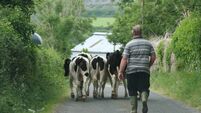
In time, the majority of these calves will grow into beef animals, either as steers, young bulls or beef heifers.
The question must be asked — can young animals be finished more efficiently at a younger age? Finishing stock at a younger age would help increase productivity and output per hectare on beef farms. Also, the imposition by meat processors of penalties on cattle over 30 months has increased the need to finish stock at a younger age.
For the coming grazing season, the first thing that should be done on all farms is to set targets for each group of grazing stock. Be realistic with target weight gains/ growth rates for each group.
It is much cheaper to put weight on younger animals than it is with older animals. Older and bigger animals divert much more of their food to maintenance before gaining weight. In all production systems, it is vital to have a period devoted to frame growth, to avoid low weights and over-fat carcasses. The period between seven months and eighteen months is when the animal is capable of the best frame growth. Putting on 75mm (three inches) more height during this period will result in at least 25-30 kg of more carcass weight.
The following is the experience of a farmer involved in the Teagasc/Farmers Journal Better Farms advisory programme, who last year actually finished a batch of continental cross heifers at 12.5 months of age.
The farmer in question took five of his heifers to the mart in the middle of August 2013. The heifers on the day averaged 344.8kg and he was offered an average of €732/hd or €2.12kg live weight. Not happy with the price, he decided to take the heifers home any try and finish them. Once back on the farm the heifers were put back to grass and offered 1 — 2kg of meal until October 15 . From October 15 to November 7 they were offered 6kg of meal per day.
Then from November 7 to December 3 they were given ad lib meal via a creep feeder at grass before they were slaughtered on December 4.
The heifers consumed approximately 540kg of meal per head from mid August at a cost of €140/head. Grass costs were estimated at €15, bringing total feed costs to €155/ head. The average carcass weight of the heifers was 266.4kg so they were around 490kg/LU.
All heifers graded fat score three or better and the conformation ranged from one O to one R and three U’s.
Assuming the heifers were 40kg at birth and were slaughtered at an average age of 380 days and heifers gained approximately 1.18kg/day from birth to slaughter.
Heifers came in to €1,149/ hd, which equates to around €4.31/kd. When you deduct the total feed costs of €155/hd the heifers and a margin of €265/hd over selling as wean-lings on August 15.
Although this is only one small trial it highlights several points:
¦ Young animals are hugely efficient when managed well on concentrates
¦ Animals that are attaining a good level of thrive throughout their lifetime can be slaughtered at a young age and a ttain an adequate fat cover
¦ It is important to know the value of your stock on the day of sale.