Ground is ready to push grass

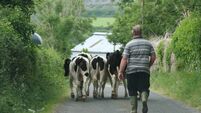
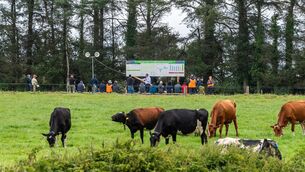
As I travelled around the country over the past week, I noticed that tur nout of animals had started, despite the bad weather.
Ground is ready to push grass

Many dairy farmers want their milkers out by day; some want them out by night.

A lot of weanlings are likely to be turned-out to grass if weather permits.

For many, it is necessary to get stock out, because fodder is getting scarce.

However, there is not much grass in paddocks.

Those lucky enough to spread slurry earlier on report that grass is green, but has not grown.

But there is no doubt that ground is ready to push out g rass, once the weather settles, hopefully sooner rather than later.

It is important, at this time of year, that livestock farmers have an appreciation of the quantity and quality of grass available to their cattle.

The first rotation of grazing has the highest dry matter, highest fibre, lowest energy, and lowest protein of any grazing throughout the year.

It is worth remembering that grass is a feed ingredient like any other, and needs careful balancing, from time to time, to optimise performance.

Grass Quality

Grazing swards are lovely and clean this spring, due to the excellent grazing conditions in the last back-end.

It is important to commence grazing at the earliest opportunity, because paddocks that have already been grazed this spring are growing more grass than un-grazed swards.

This is a contrast to the spring of 2013, when swards were full of dead, unpalatable grass.

Sward Management

As the grass available in the first rotation is a dry material (approx 18 to 21% dry matter), stock will be slower going through swards than you might expect.

Allocating too much grass will result in waste, particularly in the first few days after turn-out, when animals do a lot of walking.

In heavier soils or in wet weather, animals will also drag clay around on their hoofs, dirtying swards.

Poorly managed swards, at this time of year, can result in very low grass utilisation, and affect subsequent grass quality and yields.

Animal Performance

Obviously, re gardless of sward quality, performance of animals is the priority.

Stock went into the winter in great order, and their appetites, in general, have

Sucklers Calved

Sucklers are also being turned-out, at present.

Remember that these cows must produce enough milk for their calf, while not losing too much condition themselves.

The management of these cows is also aimed at getting them back in-calf quickly.

As a result, they should not be forced to graze too tightly. Remember, also, that the calves will be starting to pick at grass as their rumens develop, and they will be more likely to pick at better-quality grass.

Don’t forget the magnesium lick for the cows.

More in this section

Farming

Newsletter

Keep up-to-date with all the latest developments in Farming with our weekly newsletter.

Cookie Policy Privacy Policy Brand Safety FAQ Help Contact Us Terms and Conditions

© Examiner Echo Group Limited