GLAS not income support scheme: Coveney
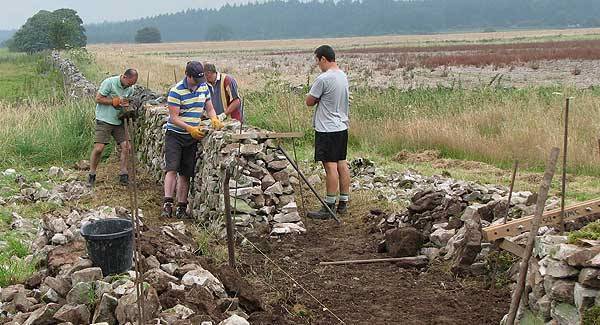
“I refer, for example, to dry stone wall maintenance, setting aside areas for nature and wildlife habitation, protecting watercourses or whatever.”
In 2015, the new green low carbon agri-environment scheme will also, for the first time, give payments to farmers in Natura areas and special areas of conservation for required actions such as protecting water courses and biodiversity. Some of these farmers are not currently paid for such actions.
Responding to charges that it will be impossible to get 80% of commonage farmers to agree if they want to take part in GLAS, Mr Coveney said: “There will have to be a commitment from farmers in commonage areas to do the jobs. Otherwise we will not be able to pay them.”
“This is not about income support, rather it relates to people being paid for doing something positive with regard to the environment and sustainability. The idea that we should focus GLAS payments on low income farmers misses the point totally. This is an environmental scheme. We already have a disadvantaged areas payment scheme to support low income farmers. There are also other supports for farmers on low incomes.”
The basic GLAS scheme will provide a maximum payment of €5,000 for up to 50,000 farmers. It will target specific environmental challenges and will focus on biodiversity, water quality, climate change issues and emissions, requiring specific actions by farmers in these areas.
In the GLAS plus programme, farmers will be able to top up that €5,000 with an additional €2,000. “This will be a demanding scheme for farmers,” said Mr Coveney. “A farmer wishing to farm in a manner that is focused on the promotion of bio-diversity and the development of an environmentally friendly farming system, which goes above and beyond what is demanded by the basic green low-carbon agri-environment scheme, GLAS, will have the option of doing so and to be paid extra for doing it. I suspect most farmers will not be in this category.”
“If a person’s primary focus relates to creating habitats and increasing biodiversity and if he or she is essentially replacing a commercial dividend with that, we want to give him or her a top-up payment. I am of the view that the numbers involved will be relatively small.”
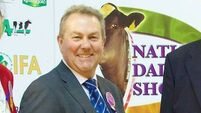
nIFA Rural Development Chairman Flor McCarthy said the Natura payment must be restored to €150 per hectare, and GLAS payments should apply across the whole farm, similar to REPS.
He called for hedge and tree planting as a core GLAS measure and for inclusion of species-rich grassland and traditional hay meadows, which have proven popular with AEOS farmers. He wants GLAS to be open for applicants next autumn, with a Jan 1, 2015 start date.
Pat McCarthy of the United Farmers’ Association has warned that getting at least 80% of hill and mountain farmers on commonages to form a collective and sign up for GLAS is impossible — and will rule out huge numbers. He also warned against €150 per hectare of areas designated for environmental protection being limited to only the first 33.3 hectares in the new scheme.