Our agriculture must not be stifled by GHG reduction
He also said he would not set sectoral targets for emissions reductions — more good news for farmers, who already knew that the 20% reduction in greenhouse gases (GHG) intended for 2020 was to be revisited by the EU and governments.
The 20% reduction would have required the Government to purchase carbon credits from other countries, or pay very heavy penalties for exceeding GHG allowances.
Fortunately, global agreement on an even higher cut, of 30%, now also seems unlikely.
Ireland must now prepare a strong national case for change, based on science, national priorities and comparative advantage.
Even under the most optimistic scenario, Ireland was not expected to meet its 2020 emissions target with existing policies and measures, with agriculture and transport the most problematic areas, together comprising 70% of our non-traded emissions.
Mr Hogan indicated he will seek concessions for Irish agriculture, and a change of the basis on which emissions from agriculture are calculated. He argued a balance needs to be struck between climate change and agriculture policy, in view of rising populations and food security worries.
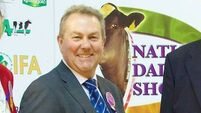
IFA President John Bryan welcomed the commitment to adjust the way in which emissions are calculated, as an important acknowledgement of the advantages of our grass-based system, compared to other countries.
Fortunately, most of the agricultural research findings to date indicate that there is little conflict between good farming and care for the environment, including GHG reduction.
For example, Teagasc research findings have enabled many farmers to save a lot of money on fertilisers, without loss of production, and to better look after the environment.
Agricultural research has also proved the benefits of grassland management for the environment.
Teagasc Moorepark researchers also have said the Irish case must be based on the need for more food production globally and emissions per unit of production should be the criteria used in when looked at in negotiations.
According to Teagasc, the global threat of GHGs can be seen as an opportunity — if carbon sequestration is factored in, Ireland has a significant competitive advantage.
Carbon sequestration takes place when GHGs are reduced by removal of carbon dioxide via photosynthesis. Grasslands mainly, but forests also, are carbon sinks which sequester carbon, and are increasing in Ireland — compared to, for example, South American countries, where forests have to be cut down to increase food production.
Technical efficiencies must overcome any changes that will have to be made to reduce emissions.
The world needs massive increases in food production to feed a growing population, and Ireland can produce food efficiently.
Expansion in Irish agriculture, especially dairying, must not be stifled by green regulations.
We cannot afford to destroy our present generation of farmers with actions that may or may not be of benefit to generations in the distant future.
A tax on livestock has been suggested, but former EU Agriculture Commissioner Fischer Boel said it would only drive livestock out of the EU to other parts of the world. Recently, EU spokespersons said a specific tax cannot be put on animals until an accurate system for monitoring and verifying is developed.