Minister intends to increase stocking on commonages
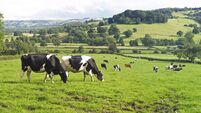
He said Ireland has a problem with understocking in some commonages and mountainous areas.
“People need to realise that the sensitive biodiversity of the hillsides in question relies on stock keeping certain grasses and plants down by grazing.
“Understocking is often as dangerous to biodiversity and the protection of the landscape as we know it as overstocking. There is much evidence to suggest we need to increase stocking rates. My Department is pursuing this,” revealed Mr Coveney.
“In the not-too-distant future, we will see a relaxation of the stocking rates within certain areas.
“We want to encourage farmers to increase stocking rates to try to support the active farmer concept, and perhaps link this to some payments.”
Active farmers are to get preference for single farm payments in the ongoing reform of the CAP, and the EU Court of Auditors has said beneficiaries who have no or only insignificant agricultural activities should be excluded.
However, the move in Ireland to raise stocking rates will require some reversal of the destocking policy launched in 1998 in agreement with the European Commission.
Then, Commonage Framework Plans were drawn up by agriculturalist-environmentalist experts supervised by the Departments of Agriculture and the Environment.
In many areas, they recommended reductions in sheep numbers to allow vegetation to recover from overgrazing. Farmers were compensated for this, with 3,700 REPS farmers on commonage receiving an additional €7 million a year, and farmers not in REPS claiming €5m per year from Dúchas.