Happy to work through it
The best you can hope for is no calves or lambs expected over the Christmas, so you only have to feed the livestock and the rest of the day is yours to enjoy with the family.
Let’s hope no animal falls ill at an inconvenient time.
On dairy farms the situation is rather different.
For those still milking, Christmas Day is much the same as any other.
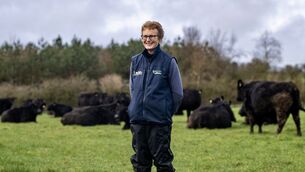
“I don’t give up milking for the winter,” says Galway dairy farmer Seamus Finn.
“Between milking and feeding, I’ll have about two hours to do in the morning and the same again in the evening.”
You might expect Seamus to resent having to spend so much of the day working on his farm at Cappatagle, Ballinasloe, when most people are inside by the fire.
But Seamus is glad to have something to do. He doesn’t mind at all having to work on Christmas Day.
“I’d be bored silly otherwise,” he says. “After a big feed of turkey, milking clears my head. I like being out in the peace and quiet.”
The likelihood that Seamus will be dealing with a new calf on Christmas day is an odds on bet. “I bought quota and I had a few cows that didn’t calve in the spring who are due this month.”
Other dairy farmers, whose herds are dry, will have more time on the sofa over Christmas and during the winter months. But that wouldn’t suit Seamus.
“I often wonder what they do with themselves all day long,” he says.
“As well as having nothing to do they have to wait a long time till the full milk cheque starts to arrive again.”
Perhaps those who are looking forward to a peaceful and quiet Christmas ought to envy Seamus. He says he finds peace every day of the year in his milking parlour.
“I might be considered a bit odd for that,” he says. “But I don’t mind at all.”
In contrast to four hours, at least, that Seamus will have to put in, Jimmy Lyons will only have to spend a few minutes away from the fire. This Mayo suckler farmer says that, compared to years ago, he won’t have much to do on Christmas Day. “I’ll just have to shake out a bale of silage for the cattle and take a quick look at them,” he says. “It’ll only take a few minutes, because I’ll have the bale put in the shed the day before.”
It wasn’t that easy years ago on Jimmy’s farm at Knock. “Before silage cutters and slatted houses, and when all the silage was in a pit outside, there was a lot more to do,” says Jimmy. “It would take about an hour and a half of heavy work to finish the routine. You’d work up a great appetite for your dinner.”
In those days, the trick was to give the cattle more silage than usual on Christmas morning. This wasn’t a present for the cattle on account of the day that was in it. It was the family’s way of giving themselves the present of a break from the normal routine. “We’d pile the silage high so we wouldn’t have to go out to them again,” says Jimmy. “They could take their chances after that.”
Jimmy doesn’t expect his dinner to be interrupted by the arrival of any unexpected calves. His herd is not due to start till March.
“We did have a calf once on Christmas Day,” says Jimmy. There are no prizes for guessing what he called the unexpected arrival.
“We called him Claus for short,” says Jimmy.
Cereal and beet farmers have no livestock to be seen to. So you’d expect that farmers like Dick Fitzgerald could forget about the farm over the holiday period. But Dick will be out on his land at Castlemartyr in Co Cork on Christmas Day, just as he has been every day for the last few weeks.
And he’ll have his shotgun with him. “The birds are playing hell with the winter wheat,” he says. “I’ll be out on Christmas Day hunting them out of it.”
This problem is particularly severe over the last two years, because a seed dressing which used to deter the crows was banned by the EU. Now the birds find Dick’s wheat seeds much more palatable. He uses scarecrows and automatic scarers as well, but the birds soon get used to them. Dick needs to make regular visits to the field himself several times a day for the four or five weeks it takes for the crop to establish itself.
“To be honest, I’m glad to have an excuse to get out,” he says. “You’d get fed up stuffing yourself all day at Christmas. You’d seize up if you got too much of that. I’d be going for a walk anyway.”
It seems that many farmers are glad to have to have something to do on Christmas Day. And those that haven’t will take the opportunity to get out on the land anyway. When farming’s in the blood, not even Christmas Day brings a change.